
| Year | Album | Artist | Stars | Score | Genre | ||
|---|---|---|---|---|---|---|---|
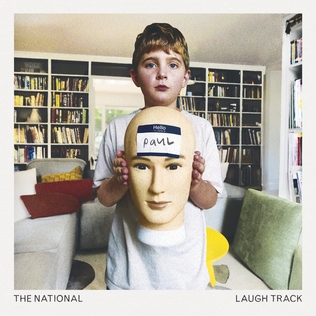
| 2023 | Laugh Track | The National | ★★★ | 60 | Rock | Indie Rock | Chamber Pop |
Laugh Track — The National’s 10th studio album and second release of 2023 — is a slight turn back to the band’s indie rock roots, but still, like its predecessor, comes off as a collection of songs that are pretty and pleasant but that could use a bit more energy.
I was optimistic listening to “Alphabet City” and “Deep End” to open the record. They had some movement and noise that I felt was severely lacking on the First Two Pages of Frankenstein. The back half of “Turn off the House” takes off in a really nice way, and the drums and guitar on “Smoke Detector” captures those old feelings as well.
Overall, the tender moments here also are more effective than they were on the prior record, and songs are better developed.
However, they band does at times feel lethargic, and too often are mellow instead of lively and warm. The record isn’t bad, and there’s nothing to hate or even dislike here. But it is still frustrating compared to how consistent the band had been in their heyday from 2004 to about 2017.
The band’s current, softer approach started on 2019’s I Am Easy To Find, which relied heavily on chamber music and collaborations with outside vocalists.
While I Am Easy To Find was maybe a little too artsy at times and definitely had a few too many tracks for anyone to really love the entire record, the standout moments and overall songwriting were stellar, and the massive undertaking required to stitch all the elements together was admirable. The songs moved with energy and emotion. The different women who popped in and out added new personality and variety.
Most importantly, the record still featured songs that really rocked. “You Had Your Soul With You,” “The Pull of You” “Where Is Her Head” and “Rylan” all had some real power to them thanks to driving drums and guitar riffs. And they contrasted well with piano-based ballads like “Quiet Light,” the title track and “Light Years,” which are three of the best tracks Matt Berninger’s ever written.
The band’s two efforts since have felt watered down and simplified, with the big issues being a lack of energy and what feels like a dumbing down of Berninger’s songwriting.
One of the best lyricists in the indie rock world through the band’s first two decades, Berninger’s words no longer capture my attention or paint pictures as well as they once did. Take this refrain as an example. “It’s a calculator I made a mistake on. I never should have said it like I said it. It’ll come to me later, like a Space Invader.” That last line is repeated a few times on the track, but doesn’t actually mean anything and doesn’t invoke any specific images, serving only as a middle-school level poetic rhyme or nostalgia bait for those with an affinity towards arcade games and UFOs.
He still sings with emotion, and there are bits and pieces of greatness, where you can feel his personality come through. There are still throughlines of themes across the album and standard bits of reflective storytelling that exists, which elevates The National above the gibberish songwriting of so many other bands. But the drop off in quality and consistency is noticeable compared to Berninger’s best work.
Most of the songs are fine and get the job done. “Dreaming”, the aforementioned “Space Invader” and “Turn off the House” all build in classic National fashion from start to finish. “Hornets” sounds like a typical National ballad with light guitar and piano melodies that fans have heard and loved countless times before.
However, outside of “Deep End,” the album’s real standout song, none on here are likely to beat out your favorite tracks on Trouble Will Find Me or Boxer or High Violet or even Sleep Well Beast. They’re not bad, but aren’t able to reach those heights I’ve come to expect and hope for since Alligator.
“Weird Goodbyes” featuring Bon Iver is a fine single that feels out of place as an album cut, and I haven’t been a big fan of any of their slow, indie pop tracks with programmed drum beats or timid instrumentals. The two others here — “Laugh Track” featuring Phoebe Bridgers and “Crumble” featuring Rosanne Cash — similarly fall short of the mark, and feel included just to have collaborators listed in the album credits instead of breaking new ground.
It’s a shame, because I like Aaron Dessner’s production, I really like Bon Iver and Phoebe Bridgers has some really good records. It’s all elements that I like and that should work together flawlessly, but having that style as a primary driver doesn’t work for The National in the same way it worked for Taylor Swift when she put out Folklore and Evermore with Dessner in 2020.
If there are swaths of new fans discovering The National and loving the new style, then that’s good for the band. Bands should evolve as they go and it’s common for groups entering their third decade of making music together to sound different from their early days. In fact, the band still sounding as good as they do and having their creative drive this deep into their careers is pretty outstanding.
Those old songs still exist in the catalog for folks who do enjoy the old days. As someone who’s been a huge fan of the band for over a decade, these recent albums haven’t done it for me, and I crave a little more guitar and drum, and a little less indie pop.
This review sounds overly critical for an album I didn’t mind, but The National are a band I hold to a high standard because of how good they can be.
 Fresh Out The Deli