
| Year | Album | Artist | Stars | Score | Genre | ||
|---|---|---|---|---|---|---|---|
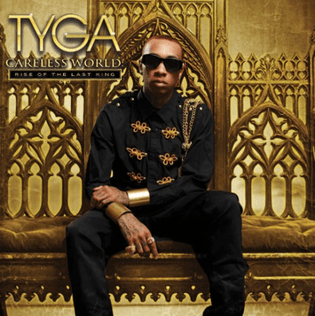
| 2012 | Careless World: Rise of the Last King | Tyga | ★★½ | 53 | Hip-Hop |
Listening back to Careless World: Rise of the Last King a decade later, I’m sure a lot of the enjoyment is due to the nostalgia that comes from immersing yourself into the post blog-era “up-and-comers” movement Tyga existed in that included clean, pop-forward production and confident flows by rappers like J. Cole, Wale, Big Sean, Wiz Khalifa and B.o.B. (each representing different groups like Young Money, Good Music, Maybach Music, to varying levels of success).
Careless World: Rise of the Last King is a great time capsule that summarizes the era. It acts as a pretty good bridge between the warmer, pop-heavy production that was prominent beginning in 2010 and the heavier, more trap-focused pop songs of 2012 and 2013. And it features all the recurring characters you’d expect from a big, commercial rap album in 2012, making it a pretty fun record despite its pretty obvious flaws.
The opening track is an epic place setter that’s a bit over the top but is emblematic of its time. “Lil Homie” is a fun, clap and stomp Pharrell beat and feature, with simple electro synths. Tyga’s flow sounds great on “Muthafucka Up,” and he gets a nice verse from Nicki Minaj while she was at her peak. “I’m Gone” has a standard Big Sean verse and nice, soft, nighttime R&B production. On “Black Crowns,” Tyga tries to be a little more emotional, with a clean, but darker, beat to match the occasion. “Still Got It” is a fine song that works mainly because…well, Drake was so hot at the time that everything he touched in 2012 just worked.
“Faded,” featuring Lil Wayne, and “Rack City” were a smash hit when they came out. The pop trap kind of club bangers of the early 2010s were never really my preferred vibe; they’re usually repetitive, have kind of dark, flat production and are more about the feeling than any kind of lyrical craft. But the two get the job done in the right situation and are some of the better examples of the genre.
The record, predictably, isn’t without its problems. The “hard” tracks that were supposed to serve as technical showcases of the era frequently don’t work, and that is the case here. The lame beat and concept on “Potty Mouth” is weak, and an interesting 45 seconds from Busta Rhymes can’t save the track. In fact, the Busta part is kind of cool, but the beat switch is so out of nowhere that it really feels like the section was a copy/pasted repurposed from some kind of b-side.
Tyga’s not the most important lyricist in terms of content, but he’s got some clever lines and solid references when he’s clicking. However, on “King & Queens” Tyga gets upstaged by Wale and a below-average Nas verse. Same goes for “Let It Show” featuring J. Cole. I wouldn’t say the songs are total misses, but Tyga doesn’t come out of them looking like he can stand toe-to-toe with his peers as a lyricist.
The big issue with the project though is that it’s way too long, and there are far too many throwaway or flat out bad songs here and there.
“For the Fame” is a knockoff, even worse version of “Robocop” from 808s & Heartbreak with a repetitive, tired, whining chorus by Chris Brown and Wynter Gordon. “Celebration,” with T-Pain belting the chorus, is okay, but by 2012 we’re already deep into the waning stages of T-Pain’s run, and it sounded dated even back then. “Far Away” is a standard inspirational track that’s unexciting but fits in with others of the time like “Written in the Stars,” “Battle Scars,” etc. “Love Game” throws an annoying, repeating sample that sounds like a barking seal at you every 15 seconds and then breaks down into an appalling, cringy bargain-bin dubstep beat on the back half of the track. “Lay You Down” has a Lil Wayne feature and guitar part that’s… fine but unimpressive.
This has the makings of a solid 12-14 track record if you cut the useless interludes and weaker tracks. But at 21 songs and about an hour and 10 minutes, it’s too much, especially when the majority of it is derivative of itself.
 Fresh Out The Deli