
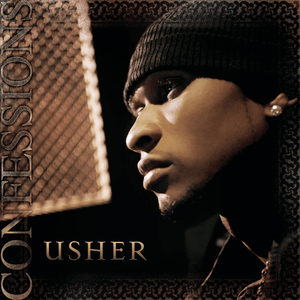
| Year | Album | Artist | Stars | Score | Genre | ||
|---|---|---|---|---|---|---|---|
| 2004 | Confessions | Usher | ★★★ | 64 | Hip-Hop | R&B |
Usher’s Confessions has more bangers and hits than any other R&B record of its era.
It starts with energy right away with “Yeah!,” one of the most iconic songs of the 2000s and a track that, even if it sounds a little dated now, never fails to bring a smile to my face. With its simple but infectious chorus, loud dance-floor synths and whistles, Usher is a great showman, while Lil Jon hypes up the crowd with his adlib and Ludacris — who was at the peak of his powers in 2004 — brings the swag and confidence with his feature verse. It’s not really an R&B song, but it hits you right away at the top of the record.
“Throwback” then brings the emotion, with Usher singing over a Just Blaze beat that brings some rock drums and guitar, soul backing vocals and stings. The Jadakiss feature on most modern versions of the record adds a little hip-hop edge and ruggedness that helps keep the energy up before the album really dives into it’s R&B bag.
“Confessions” and, more importantly, the fabulous “Confessions Part II” are what R&B of this era are all about — smooth, kind of simple piano and guitar beats that are memorable and set the scene of these absurd, over-to-top stories about a single night of passion and the unintended consequences. Oh no, Usher got his side-chick pregnant, she’s gonna keep it, and now he’s gotta tell his main girl that he messed up. It sounds dumb, but the lyrics are so memorable because of how simple the concept is, and Usher sounds so freaking good on it — switching up his flows while he raps the story, singing the chorus and throwing in harmonies to drive us home — that you can’t help but sing. The next song, “Burn,” is even better. A break up song this time, you can’t help but belt out “So many days, so many hours, I’m still burnin’ ’til you return” along with him before the final chorus.
After that, “Caught Up” is a standard up-tempoed dance track with a good groove and brass section on the chorus that helps bring a little more drive to the album after the R&B heavy section.
From there, the album does fade a bit, but there are still highlights. “Truth Hurts” and “That’s What It’s Made For” are great soulful beats, and Usher brings a more serious approach vs. his pop persona to show off his vocal skills. “Can You Handle It?” is a really nice, smooth R&B “let’s get it on” track with good singing and without any over dramatic production or popification thrown in. Yeah, the sexual narrations that are on this track and scattered across the album feel really dated and corny, but for that kind of song, these are pretty easy to stomach.
“Do It To Me,” on the other hand, isn’t easy to stomach, and is pretty boring. On “Superstar,” Usher flatters a woman he’s after by calling her a superstar while describing his own life of fame and pointing out “This is a metaphor to show how I adore you baby.” It’s not one of the better songs here, but it sounds alright sonically. “Simple Things,” “Bad Girl,” “Take Your Hand” and the album’s closing track “Follow Me” are a little generic and flat compared to the album’s best songs.
Of course, talking about this record without mentioning “My Boo” would be foolish. It was a No. 1 single off the deluxe edition of the album and was released later in 2004, so it’s technically not on Confessions proper, but the duet between Usher and Alicia Keys is probably the best song from the recording session. Other than “Yeah,” it’s had the most staying power in modern music, most likely because of No I.D.’s production and the great vocals.
Despite its immense popularity, Confessions essentially marks the final chapter of two lingering movements in hip-hop that started in the mid 1990s, when Usher was first coming up. The dominance of P. Diddy and Bad Boy Records — which peaked right around the time of Biggie Smalls’ death in 1997 — had lost most of its momentum by 2002, as southern hip-hop stars and the work of soul-sample influenced producers like No I.D., Just Blaze and Kanye West took more of the spotlight. Simultaneously, the PG-13 radio and music video male-sung R&B that was so prominent for a decade — Joe, R. Kelly, Ginuwine, Brian McKnight and various boy bands — had almost all been replaced by 2004, as female singer-songwriters with more interesting or upbeat soul production and showy pop vocals took over.
Oddly enough, “Yeah!” also ushered in a new era of dancefloor-oriented hip-hop. Crunk and dance songs like “Get Low” and “Freek-a-Leek” had success before that, but “Yeah!” reaching number one demonstrated the potential earning power that pairing a hip-hop heavyweight like Ludacris with a dance beat could unlock.
About a year later, prominent producers like Timbaland (“Ice Box,” “Promiscuous” and “My Love,” in 2006, and “Ayo Technology” in 2007) and Will.i.am, as well as artist like Diddy himself (“Last Night” in 2006) started adding more synths and pop vocals to their productions. Pop artists like the Pussycat Dolls (“Don’t Cha,” 2005) and Justin Timberlake also introduced rappers on their dance tracks.
The trend grew and lasted well into the 2010s, with Usher recapturing success multiple times using the formula on songs like “Love In This Club” in 2008, “OMG” and “DJ Got Us Falling In Love” in 2010 and “Scream” in 2012.
 Fresh Out The Deli