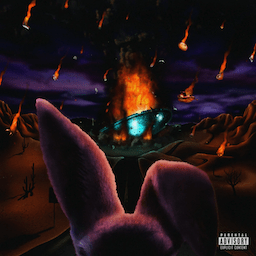
A hip-hop veteran who’s always worn his confidence and swagger on his sleeve across his collaborations, albums and feature verses, Pusha T has been in a great rhythm since Daytona came out in 2018. It’s Almost Dry is such a solid hip-hop album, there isn’t really that much I have to say about Pusha T’s performance other than I really like it. It’s Pusha T doing what he does best: sounding cool and talking about pushing drugs over good beats.
Pusha T proves for the second album in a row that he can carry his own album and be the star of the show. “Call My Bluff” and “Brambleton” are probably my favorite tracks here and showcase Push’s range and craftiness.
But while he’s the focus first and foremost, a big draw of the record is the collaborations with folks he’s worked with in the past. Jay Z fits in with Pharrell and Push on “Neck & Wrist,” which serves as a nice sequel to 2016’s “Drug Dealers Anonymous.” “I Pray For You” is a triumphant reunion of Push and his partner in Clipse, Malice.
For production work, It’s Almost Dry also brings together two familiar faces: the aforementioned Pharrell — who produced Pusha T’s work with Clipse back in the 2000s — and Kanye West — who produced Daytona and countless other Good Music tracks featuring Pusha T over the previous 12 years. (Thank God It’s Almost Dry came out before Kanye was truly, unequivocally known as an anti-Semite).
While Kanye seems to mail it in with his two guest features on this album, as a producer he pulls some rabbits out of his usual bag of soul samples and beats. “Diet Coke” is one of the most obvious Kanye-sounding sample flips he’s made, but it really works and is one of those songs that, if you have it on repeat, you could listen to it five or six times before realizing it’s starting over. “Just So You Remember” sounds like it’s straight from the Daytona sessions.
But Pharrell really brought his A Game on this one and kind of wiped the floor with Kanye. He counters Kanye’s samples with some soul pulls of his own like on “Let The Smokers Shine The Coupes.” And for some reason Pharrell’s patented Neptunes bounce throughout in the bass and percussion tracks — from “Brambleton” to “Neck & Wrist” and “Call My Bluff” — feels more energized and adds a bit more depth to the overall mix than usual.
Whenever Kendrick Lamar puts anything out — a full album, a compilation, a new single, a new feature — it’s an event. It’s something that demands attention beyond just hip-hop fans or those that follow music culture closely. It’s the first thing anyone listens to that day, and then (if you’re me, anyway) you roll it back again, and again, and again until the day is over. Because every record he’s put out since 2012 has been a masterpiece, every single he’s put out has been solid at worst, and almost every song he’s been featured on, he’s spit hot fire.
Mr. Morale & The Big Steppers is, again, a masterpiece. It’s a masterpiece, because no individual other than Kendrick can weave so many different themes into one record. No individual other than Kendrick knows how to consistently push the boundaries of, not just hip-hop production, but production for all popular music genres. Nobody raps like him. Nobody writes like him. Nobody sounds like him. Nobody demands your attention on a song like him.
Harmonies open the album, before sharp, individual piano chords welcome Kendrick on “United in Grief,” his voice building with the addition of chaotic drums mimicking tap dancing, bouncy staccato strings transitioning to full, smooth chords, and fading out to gentle piano that contrast the opening notes. Similar to the opening moments of To Pimp A Butterfly, it sets the scene flawlessly, sounding like something new that you haven’t quite heard before, and lets you know Kendrick has something to get off his chest.
The second track, “N95,” is the closest thing to a radio hit on the album, and the hard-hitting piano and synth production mixed with Kendrick’s lyrical repetition makes it instantly captivating.
The tap-dancing sounds season the record here and there and connect themes across moments, while that piano is ingrained in the fabric of the record, with almost every track featuring it in some way.
Prime examples of the piano both being used as a driver for the song and as just a texture are “Father Time,” which features a great Sampha appearance (where has that guy been?), as well as “Purple Hearts,” with guest features by Summer Walker and the legendary Ghostface Killah, the almost tribal sounding “Crown,” and likely the most personal, moving, Vulnerable, genuine, heartbreaking song on the record, “Mother I Sober,” featuring the incomparable Beth Gibbons.
My favorite track on the album is “Silent Hill,” which sonically sounds different from the rest of the record. A more standard hip-hip/R&B composition compared to some of the more nuanced production across the album, the song gives off strong driving/chilling at night vibes using a thudding bass underneath soft, dreamy chimes and strings that drag in emotion. Plus, Kodak Black inexplicably gives the best verse on the album.
Another album highlight is “Mr. Morale” featuring Tanna Leone. Produced by Pharrell, his patented bouncy percussion and backing vocal layers build intensity, mixing with haunting chanting in the distance. It stand out as a welcome change of pace near the end of the record and between two of the album’s heaviest songs emotionally.
But, while the album has a lot to praise, it’s the most imperfect of Kendrick’s masterpieces. Partly because we hold Kendrick Lamar to a higher standard than we do most other hip-hop artists, both musically and as a person.
Maybe that’s unfair. After all, as he points out specifically on the album, he is not our savior, he didn’t sign up to be the moral conscience of hip-hop music and he’s never pretended to be a perfect person or someone without demons.
Kodak Black was featured on dozens of records over the past two years before Kendrick got roasted a bit for giving him a feature. Is Kodak Black’s inclusion a fair criticism?
Probably not, but… Kendrick probably should have known better, or at least expected some of the backlash, and maybe could have found someone else to give multiple appearances to, as good as Kodak might have been on the songs.
Similarly, criticism comes from his repeated use of a gay slur on “Auntie Diaries,” a song that’s specifically about sexual/gender identity and how the meaning of the word and how it was used in his youth, when he admits he was ignorant, is different from his view of it today.
Hundreds of classic hip-hop songs, as well as big hits in the not so distant past, used the word and other similar slurs casually with little repercussion, if any at all. Is it fair to hold Kendrick to a different standard and to get up in arms about it, especially when he’s doing it in a way that’s trying to actually discuss the issue?
Probably not, but… there’s no way Kendrick didn’t think at least some people would be offended by it, and the hubris to say it over and over, even if it’s intentionally for impact, probably is worth talking about. After all, if this was a white guy in a song using slurs to prove a point, no matter how smart of a point they might think it is, they’d be canceled in a second.
It is all worthy of criticism, I think, because we have had a decade of Kendrick Lamar proving that he’s the smartest guy in hip-hop, that he understands big-picture political movements and struggles. Whether he signed up intentionally to be a mouthpiece for change and higher thinking or not, that is what he became, and with the years of praise and bowing down in awe of his best works comes a more critical lens when things don’t work as well.
But beyond the few things on the album that got some riled up to pseudo-cancel Kendrick when it first came out, the main issue about the album is, despite the great musical moments and lyrics, I don’t find some of the tracks particularly memorable.
The songs seem more important and deep than 2017’s radio-friendly DAMN. (although DAMN. had some pretty heavy stuff in it too despite the more accessible façade), but the story telling isn’t as fun or vivid as good kid, m.A.A.d city, and the lyrics and metaphors aren’t nearly as poignant as To Pimp A Butterfly and sometimes fall short (as fun as “N95” is, “Bitch, you ugly as fuck” as a chorus is pretty lazy for Kendrick standards).
Although I like most of the tracks, I tend to turn some of them on, sit through a verse or two, and then skip to the next, instead of listening through the whole song from start to finish, something I rarely do while listening through an album I really like.
It could be a product of Mr. Morale being a double album that’s almost 75 minutes long, or that the interludes and beat switches make it feel even longer sometimes than 18 tracks. And while songs like “Worldwide Steppers,” “Die Hard,” “Rich Spirit,” “Count Me Out” all sound cool, they feel like they don’t really go anywhere once you get to the meat of them, and “We Cry Together” and “Auntie Diaries” aren’t really songs I’d want to listen to, although I understand why they’re on the record and their production is solid musically.
Not all great albums are great to run back time and time again, and after that initial rush of the release back in the early summer of 2022, I haven’t found myself going through Mr. Morale start to finish all that frequently. Some songs are for sure in my rotation, others are great — like a highly acclaimed, important movie that you watch once and appreciate, but don’t have to rewatch too often — and some I choose not to listen to. But it is a great record.
What are the two things you want from a DJ when you’re out dancing? You want them to play something that you recognize, and you want the music to transition seamlessly from one track to the next. On Renaissance, Beyonce does both those things better than almost any other pop or R&B artist could.
The familiar: Beyonce’s voice is obviously familiar, and she gives a vocal performance up there with the best she’s given. But with that, comes a mix of nods to other dance music as well as samples that make her original songs feel instantly relatable like old friends.
Not all the references are as straightforward as the “Show Me The Love” sample on “”Break My Soul” or “Milkshake” on “Energy,” or as easy to draw comparisons as “Cuff It” and “Virgo’s Grove,” which are the closest thing to Daft Punk since… well, Random Access Memories, with Nile Rodgers replica guitar riffs and a “Voyager” styled synth breakdown. But that, plus moments that draw from artists like Donna Summers, Big Freedia and dance hall club records mesh really well together to form a complete package that’s varied in sound but consistent in aura.
That consistent aura leads us to point No. 2: seamless transition. The opening notes on the album through the end of “Break My Soul” is a nonstop party, with songs morphing naturally. Even when the style changes the energy stays the same or evolves. After that, right when you might start to get a little tired, it shifts to still fun, but less in your face, fast dance music that’s welcome. The shifts are a little more blatant or abrupt in the second half of the record, mixing in soul, hip-hop and R&B more, but it all works really well and feels sleek, shiny and precisely manicured.
This isn’t a flawless record by any means. Even if it’s fun almost throughout, at 62 minutes and 16 songs it feels long, especially with its relentless nature.
Also, I’m usually bothered a little when older, more mature artists do or say things that are trendy with the younger generation when they’re probably beyond what they’re saying. Maybe Beyonce is still going out on weekends dropping it like a thottie, but something about lyrics like that always rubs me the wrong way a little, although the song itself is good and the line is absolutely appropriate for the setting of this album. “Thique” is another one that just doesn’t work for me in that way, and is a little too dumb. “All Up In Your Mind” works better for the hip-hop influenced tracks than.
Every few years I come across a creative album that a lot of people are talking about and that on first listen I’m a bit puzzled about. What is this exactly? What genre is this? I kind of like what I’m hearing, but I don’t know if it’s actually good.
Sometimes the albums grow on me, sometimes they fade away, and sometimes — in the case of Soul Glo — they become one of my favorite records of the year, and something I go back to over and over and over.
Hardcore music isn’t always my jam. I tend to prefer punk music if I’m looking for something with energy. Punk can be a little more melodic and accessible with a similar vibe compared to hardcore songs, which usually end up breaking down and devolving into noise and creative shouting.
That said, Soul Glo is the shit. Everything they do feels deliberate while staying organic and carefree. They do so many different things on their songs — from shouting, to singing to rapping, from electric guitars, to horns, to synths and dial tones, from live drums to drum machines and rogue industrial sounds. Most of it is incorporated in fun ways that add depth and layers instead of just cranking up the volume. The band just feels like they’re having fun making music together and throwing different elements in.
With each listen, I have a new favorite song. Sometimes it’s “Thumbsucker,” a punk-styled rager with horns, or “Gold Chain Punk,” with its triumphant opening section and hardcore breakdown, or “We Want Revenge,” a loud, heavy, straight-up rock song.
Most of the time, though, it’s one of the hip-hop tracks. “Driponomics” is essentially a souped-up drill song with pounding bass, screeching guitar tones and an intense feature verse by Mother Maryrose. “Spiritual Level of Gang Shit” seems like it should be corny, but the song slaps, with a 90s funk vibe that feels like Rap Rock but actually… good? It’s kind of amazing how all you need is a real vocalist or rapper to make rap rock palatable. The build at the end with the horns and hard core vocals are the icing on the cake.
Yes, sometimes Soul Glo strays away from the center a bit too much for me, a reminder that it is indeed hardcore music. Something like shouting “Who’s gon beat my ass” is a good line once or twice, but maybe not for a whole two minutes. Overall though, it’s a fun, creative, get-amped album with a lot to say in a genre that usually has a whole lot of noise and not much else.
Four years ago, Fontaines D.C. popped into an aggressive Irish post-punk scene with a slightly more youthful, lighthearted take on the genre. Songs like “Boys In The Better Land,” “Roy’s Tune” and “Television Screens” were catchy and had softer moments that made them stand out from the more intense, loud, heavy artists in the genre.
I wouldn’t have guessed at the time that they would be the post-punk band that would take the darkest turn with their music going forward, but it makes sense considering they never were the screaming type and were more emotional than blatantly angry.
A Hero’s Death was a pretty stark contrast to Dogrel that was more mature and serious, a bit more interesting musically but also sounded repetitive, didn’t have much range and didn’t fully capture my attention. On Skinty Fia though, Fontaines D.C. really hones in on the darker sound in a fulfilling way, and all that positive growth they showed before gets amplified.
Skinty Fia’s tracks are sometimes slow and cold, and feel like you’re plodding through the muck or snow, but without it sounding sparse or isolating. “Big Shot,” “How Cold Love Is” and “Bloomsday” are often closer in character to slowcore or shoegaze than punk music, and have gorgeous instrumental builds that can be repetitive and monotonous but in a pretty beautiful, captivating way. And when moments may seem a little too melodramatic, Grian Chatten’s straightforward, even vocal performance balances it out.
The more upbeat tracks like the opener and “Jackie Down The Line” have heavy 1990s grunge-style guitar effects and drums that build in energy as they go. “Roman Holiday” is a bit more lively, with a cool opening guitar solo, some warmer chords mixed into the minor keys, and a softer outro, and the record’s title track has an industrial groove that makes it stand out.
For how slow tempted some of the songs are, especially near the beginning of the record, it’s a breezy 10 tracks and 44 minutes.
I tend to like all of Freddie Gibbs’ albums and find them creative and interesting, but I usually don’t love them or go back to them all too often outside of a handful of standout songs. It’s weird, but I think I like 2022’s $oul $old $eperately — Gibbs’ most commercial and straightforward work in a long time — more than his more artistic outputs. Maybe I’m just a basic dude, but most of the songs are hits. The features throughout are great and everyone’s on their game — from expected solid verses from Rick Ross, Pusha T and Raekwan to really good performances by Offset, Moneybagg Yo and even DJ Paul. The production is good too from start to finish, mixing summertime bounce with some trap and hazy stoner vibes. Gibbs doesn’t fully sell out either, with plenty of deeper tracks and moments like “Gold Rings,” “Feel No Pain” with Anderson .Paak and “Dark Hearted.”
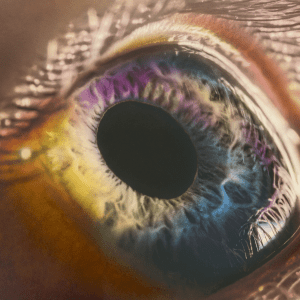
After the huge misstep that was Everything Now in 2017, We represents a return to form of sorts for Arcade Fire, one of the most acclaimed and triumphant musical acts of the past 20 years.
The band re-explores anthemic choruses, folk influenced personal moments and keeps in a few of the 80s pop elements they used on Reflektor as well. The more upbeat “The Lightning II” and the dark, drum-machine driven “Rabbit Hole” are standouts, as is the youthful “Unconditional I.”
The ballads feel authentically ’80, and appropriately a bit dated, but work well enough. Win Butler gives off some old-dude energy at times, and lyrically the metaphors feel a little forced compared to the seemingly natural delivery from the old days, but the album’s fun, cute at times and energetic at others.
Unfortunately, after the album was released, sexual assault allegations popped up against Win Butler. It’s easy to go cold turkey with some artists and just be done with them right away. Sometimes you can justify listening to old stuff that came out before the allegations but stop supporting their new efforts. And sometimes you just go into denial and can’t believe the allegations are true.
Everyone approaches it differently, but the allegations here feel particularly like a betrayal, not only of fans, who he allegedly took advantage of, but his family and wife, Régine Chassagne, who are vital parts of the band. A lot of the joy that came from listening to Arcade Fire over the years was that they sounded like a family, the lovey dovey back and forths Win and Régine had on tender tracks, and that the messages in their music talked about youthful innocence and childhood imagery.
Knowing that those family dynamics were either all for show, or that Win was going behind Régine’s back for much of that time he was singing about true love forces you to re-evaluate all their previous music, and is a real stain on the band’s legacy in my mind. I still love Funeral and Neon Bible and The Suburbs, and Reflektor (to an extent) but their charm has really taken a hit.
With how many albums and mixtapes Westside Gunn and the rest of Griselda put out each year, it’s hard to keep up with them at times or to figure out ways to differentiate one from the next. Westside Gunn’s 2022 mixtape 10 I think is my favorite of his projects to date, because it strives to be a bit bigger than the others, while Westside’s able to maintain what makes him, him.
Always a master curator who knows how to bring the right people together on a track, the features here come with prestige. Bringing esteemed, old-school lyricists like Mos Def, Talib Kweli, Busta Rhymes and Raekwon gives Westside credibility. Mixing them with modern acts like A$AP Rocky and Run The Jewels gives him some modern, commercial appeal. And having his frequent contemporaries present like Stove God Cooks, Rome Streetz, Benny the Butcher and Conway the Machine keeps him grounded and authentic.
A few songs feel a bit long, and the package isn’t as consistent as Westside’s projects usually are, but the extra firepower and some of the more detailed production work elevates it to a level that feels special. Almost every track is good, and the middle stretch from “Shoutouts in Soho” to “Switches on Everything” in particular really purrs.
Action Bronson’s a pretty interesting character, and he’s had an interesting career too. He started underground, making mixtapes and singles with pretty esteemed producers, and was featured on tracks with Odd Future, Vince Staples, A$AP Rocky and others before making his major label debut in 2015.
From that point, across albums like Mr. Wonderful,White Bronco and Only For Dolphins, he’s continued to grow and do interesting things, while being himself, staying New York at heart, and not really seeking too much of the spotlight in the music industry. Because of this, his songs have always been intriguing, fun and carefree, but for some reason usually aren’t particularly memorable, and never really become part of the greater hip hop conversation, despite some pretty good acclaim.
However, he’s always had an aura about him, which is probably why he’s gotten opportunities to host his own TV programs like like Fuck, That’s Delicious, and has made cameos on scetches and movies like The Irishman. He’s never had that star power a big hip-hop artist can have, but he can kind of hold your attention still.
That aura, his talents and his personality I think shine through on Cocodrillo Turbo more than ever before. While there still isn’t a hit single on it, there are so many subtle intricacies to his lyrics, the references, the instrumentals and overall product that it’s easy to keep going back to.
Despite The Alchemist and Daringer producing most of the tracks, Bronson clearly has a hand in it all. There are lion and crocodile growls, dogs barking and cars screeching, shattering glass and distorted shouting over a loudspeaker, raindrops falling in the background. There are jazzy drum lines behind The Doors-styled keyboards (“Subzero”) , surf’s up guitar riffs (“Tongpo”), elegant piano pieces “Estaciones”, soul samples (“Jaguar,” “Ninety One”) and gnarly underground clangs, dial-tone beeps and kickdrums (“Turkish”).
But there’s nothing too showy going on. It all feels DIY, like he took the sounds of New York City and stitched them together with a drunk afternoon at the Bronx Zoo to create these snippets of dreams or consciousness. Or maybe they’re just a hazy bunch of memories, ideas and hallucinations. It still lacks a little top-level star power, but almost every track is cool enough to work, and there’s a lot to digest during the brisk 30 minute trip.
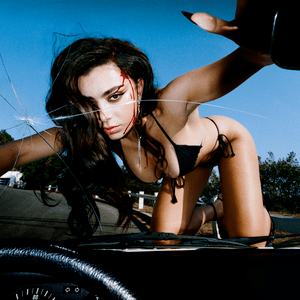
While not nearly as daring or interesting as Charli XCX’s previous album, Crash is just as fun and hones in more on nostalgic sounds and paying homage to big songs of the 80s, 90s and 2000s.
A lot of the fun is trying to figure out what other songs her tracks remind you of. From the obvious samples like “Beg For You” (September’s “Cry for You” in 2005), “Good Ones” (The Eurythmics’ “Sweet Dreams,”) and “Used to Know Me” ( “Show Me Love” by Robin S.from 1990) to the smaller hints of sound effects like the electronics on “Yock” (Grandmaster Flash’s “The Message”) or the bouncy new wave bass on “Lightning “ (which is abstractly New Order’s “Bizarre Love Triangle”).
It’s a little too straightforward compared to the glitchy, more raw 2020 albumHow I’m Feeling Now, but it’s still damn good pop music.





 Fresh Out The Deli