Girl with No Face is an energetic indie pop record that fuses dancy beats and 80s synths with the emotional energy of a dark wave/post-punk project.
Allie X really wears her influences on her sleeve, which I think is a bit of a double edged sword. What she draws from is music I absolutely love, and she does a great job of tapping into that energy.
“John and Jonathan” is essentially Kraftwerk’s “The Model,” with a Peter Hook bassline. “Black Eye” sounds right out of New Order’s Technique, with a melodic bass line and drum beat that mimics “Blue Monday” at times. “You Slept on Me” is a poor man’s “Blinding Lights” combined with the 1983 dance hit “Maniac.” “Off With Her Tits” feels like a modern, elevated version of an early Lady Gaga track or a mid-2000s Madana cut. “Galina” shares the same bouncy synth hits and melody as Charli XCX’s “Good Ones” from 2021. The opening track “Weird World” is “Holding Out for a Hero” mixed with Shiny Toy Guns’ “Major Tom,” mix, while the closer has a little bit of Toto’s “Africa” to it.
These are all good things that make “Girl With No Face” a pretty easy album to cruise through, but also naturally makes it derivative of everything that came before it. As much as I enjoy this album, I can’t really say that this new take on 80s pop is better than the Kraftwerk or New Order or Madonna cuts it draws from. Still, Girl with No Face it’s highly danceable, fun to sing along to and full of energy.
It’s been four years since Ariana Grande’s last record, but it doesn’t feel like she’s missed a beat. Eternal Sunshine is another “white girl making sexy dance poppy and dreamy R&B” record. Conceptually, Eternal Sunshine (like the movie) is about forgetting an ex, in this case, after a divorce. Lyrically, Grande tackles more personal issues, with songs about heartbreak, moving on and falling into old, flirtatious habits.
Musically, the record touches on pop styles spanning from the early 90s to modern hip-hop. “yes, and?” is a house-influenced dance track that’s really reminiscent of Madonna’s “Vogue.” “true story” sounds very Timbaland influenced, with a “Cry Me A River” vibe. “bye” brings a taste of modern disco to the mix, and “we can’t be friends” is a cute, driving europop song, channeling her inner Robyn. Then the title track — which is probably my favorite song on the record other than “yes, and?” — has the album’s best vocal and lyrical performance over a spacy, emotional beat with trap drums that seems tailor-made for SZA to be on the eventual remix.
Some of the tracks feel short, which will happen when you compile 13 songs for a brisk 35 minute runtime, but overall, as is expected with Ariana Grande at this point, I appreciate the diversity in dance music and hip-hop influences here.
Growth and maturity have been Mannequin Pussy’s story since their debut in 2014, which was an 18 minute record with 10 tracks that each thrashed for about 90 seconds.
With each release since, Mannequin Pussy has slowly refined their sound, leaning less on hardcore fuzz and more on some anthemic, pop rock choruses with grunge and dream pop guitars, while maintaining their punky energy. Their songs have felt more fleshed out compared to brief snippets and ideas of their earlier records, and their albums have also grown to the point where they feel less like EPs and more like complete works.
I Got Heaven is their fourth record, but the first to reach the 30-minute mark. Even if the band’s edge — which allowed them to stand out before in a great way — has really been toned down musically, they’re executing their new, more accessible rock approach at an extremely high level while continuing to write aggressive, confident, sometimes crass lyrics about relationships and the passing of time.
The opening track has a raucous, shouting verse that contrasts brilliantly with the song’s soothing, warm shoegaze chorus. “Loud Bark” does the opposite, opening with a bright, soft acoustic passage and gentle vocals that build to a more muddy, yelling chorus with backing layers. “Nothing Like” then reminds me of when the Smashing Pumpkins would experiment with dream pop in the late 1990s like on “Perfect.” You get this wispy guitar riff, a mechanical drum track that almost feels like a drum machine, layers of guitar chords on the chorus, with a weighty outro in halftime. “I Don’t Know You” has a similar smooth verse, with building shoegaze layers that never get too loud, and “Sometimes” adds in more energy.
I could go on, but most tracks here really follow that style and same effects pedal, other than the three short, hardcore rockers “OK? OK! OK? OK!“ “Of Her” and “Aching,” which feel raw, aggressive, emotion packed and maybe a little out of place.
That’s my one hang up with this album though. Even if Mannequin Pussy is executing this 1990s-influenced alt rock kind of sound – a sound that I love and am almost always drawn to — the formulaic nature of the tracks makes the record predictable compared to the more carefree, youthful experimentation of the old days.
I probably like seven or eight of the 10 tracks here, but I don’t think any really stand out in terms of quality or intrigue other than maybe the title track, which brings all their different elements together. That’s not necessarily a bad thing, but it makes me think that there’s still one more level above this that the band can reach.
On Lemonade, pop and R&B icon Beyonce explores recent struggles in her personal life surrounding her husband’s infidelity, dabbling in a range of different genres on her way to both self appreciation and forgiveness.
Although some of the concepts and lyrics are pretty basic and elementary, you can track the narrative easily through the record. Compared to her other albums, it makes this one feel much more personal, even if the sometimes showy production and repetitive hooks still present it all as accessible pop tracks.
Musically, the opening track “Pray You Catch Me” is presented as a normal R&B track, followed up by a light, warm song in “Hold Up,” which includes lyrical and melodic references to The Yeah Yeah Yeahs and Soulja Boy. Then “Don’t Hurt Yourself” combines some more summer pop vibes with rock guitars, drums and a feature by Jack White.
From there, things continue to grow, with “6 Inch” being this grand, swagger-filled R&B song with this sexy 1960s soul sample, a top-level chorus by The Weeknd and a dramatic conclusion that interpolates “My Girls” by Animal Collective . “Daddy Problems” starts as a New Orleans-big band melody and slides into a country guitar groove.
“Sandcastles” is a fine, standard, sentimental R&B ballad that leads into a James Blake interlude that opens the album’s final, exciting leg.
“Freedom” is a proud hip-hop track that grabs old blues samples and energizes them with booming drums and screeching organs. Beyonce’s confidence and self-empowerment is on full display here, before Kendrick Lamar jumps in and turns the micro themes of the song into a macro political perspective. It’s not the best Kendrick has sounded on a feature, as his flow is much more tame and a bit softened for a pop audience, but it really brings the energy level and stakes of the album up to the max. “All Night” then pulls the reconciliation theme in to essentially close out the record, with a great vocal performance over an epic interpolation of OutKast’s “SpottieOttieDopaliscious” that’s probably my favorite part of the entire album.
I don’t really understand why “Formation” was the last track on the album other than, sometimes artists tack singles onto the end that came out ahead of the album. “All Night” could have been a perfect closer, and the glitchy energy of “Formation” would have been fine sandwiched between “6 inch” and “Daddy Problems,” especially since her references to where her family’s from would have thematically fit in there as well.
Overall, Lemonade is a very good record and represents Beyonce’s artistic peak compared to everything that she released before it. But, I do think it’s a little overrated, in part because of the simplistic lyrics used to tell her story. Some of the mid-tempo tracks here also get lost among the heavy hitters that are more dynamic and stylistically interesting.
I feel like I could essentially write the exact same thing that I wrote for Ducks Ltd.’s first record — 2021’s Modern Fiction — to describe this second album of theirs in 2024.
Harm’s Way is jangle pop done at the highest level— happy, upbeat clanging guitar chords with basic, warm vocals. At 27 minutes and only nine songs long, it’s a breeze to listen through, and the consistency in pace, sound and happiness makes for a great, upbeat and carefree experience.
I don’t know how long Ducks Ltd. Can keep this us without their formula getting stale or without feeling like they have to evolve and introduce something new, but for now I’m definitely enjoying the ride.
The second solo record from Alabama Shakes lead singer Brittany Howard is a beautiful melding of lo-fi esthetics, joyous singing and free, emotional energy across multiple genres.
This record, like her debut, draws from Howard’s blues roots, with raw vocals, soulful guitar riffs and cool drums. There are some real rockers here — “What Now” and “Another Day” — that feel partly like Alabama Shakes or Black Pumas, with a hint of TV on the Radio’s art rock and psychedelic experimentation. But there are also a lot of neo-soul and R&B influences, with modern ambient effects and old-timey keys that make the record feel like a daydream, somewhat like Childish Gambino’s 2016 record Awaken, My Love! but without the campy, heavy handedness. And then there’s “Prove It,” an emotional, propulsive house single that somehow doesn’t feel out of place standing right next to the soft trumpets and vocals on that album’s best ballad, “Samson.” “Every Color In Blue” closes the album with some soothing “Arpeggi”-style guitar work.
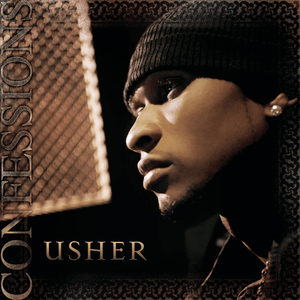
Usher’s Confessions has more bangers and hits than any other R&B record of its era.
It starts with energy right away with “Yeah!,” one of the most iconic songs of the 2000s and a track that, even if it sounds a little dated now, never fails to bring a smile to my face. With its simple but infectious chorus, loud dance-floor synths and whistles, Usher is a great showman, while Lil Jon hypes up the crowd with his adlib and Ludacris — who was at the peak of his powers in 2004 — brings the swag and confidence with his feature verse. It’s not really an R&B song, but it hits you right away at the top of the record.
“Throwback” then brings the emotion, with Usher singing over a Just Blaze beat that brings some rock drums and guitar, soul backing vocals and stings. The Jadakiss feature on most modern versions of the record adds a little hip-hop edge and ruggedness that helps keep the energy up before the album really dives into it’s R&B bag.
“Confessions” and, more importantly, the fabulous “Confessions Part II” are what R&B of this era are all about — smooth, kind of simple piano and guitar beats that are memorable and set the scene of these absurd, over-to-top stories about a single night of passion and the unintended consequences. Oh no, Usher got his side-chick pregnant, she’s gonna keep it, and now he’s gotta tell his main girl that he messed up. It sounds dumb, but the lyrics are so memorable because of how simple the concept is, and Usher sounds so freaking good on it — switching up his flows while he raps the story, singing the chorus and throwing in harmonies to drive us home — that you can’t help but sing. The next song, “Burn,” is even better. A break up song this time, you can’t help but belt out “So many days, so many hours, I’m still burnin’ ’til you return” along with him before the final chorus.
After that, “Caught Up” is a standard up-tempoed dance track with a good groove and brass section on the chorus that helps bring a little more drive to the album after the R&B heavy section.
From there, the album does fade a bit, but there are still highlights. “Truth Hurts” and “That’s What It’s Made For” are great soulful beats, and Usher brings a more serious approach vs. his pop persona to show off his vocal skills. “Can You Handle It?” is a really nice, smooth R&B “let’s get it on” track with good singing and without any over dramatic production or popification thrown in. Yeah, the sexual narrations that are on this track and scattered across the album feel really dated and corny, but for that kind of song, these are pretty easy to stomach.
“Do It To Me,” on the other hand, isn’t easy to stomach, and is pretty boring. On “Superstar,” Usher flatters a woman he’s after by calling her a superstar while describing his own life of fame and pointing out “This is a metaphor to show how I adore you baby.” It’s not one of the better songs here, but it sounds alright sonically. “Simple Things,” “Bad Girl,” “Take Your Hand” and the album’s closing track “Follow Me” are a little generic and flat compared to the album’s best songs.
Of course, talking about this record without mentioning “My Boo” would be foolish. It was a No. 1 single off the deluxe edition of the album and was released later in 2004, so it’s technically not on Confessions proper, but the duet between Usher and Alicia Keys is probably the best song from the recording session. Other than “Yeah,” it’s had the most staying power in modern music, most likely because of No I.D.’s production and the great vocals.
Despite its immense popularity, Confessions essentially marks the final chapter of two lingering movements in hip-hop that started in the mid 1990s, when Usher was first coming up. The dominance of P. Diddy and Bad Boy Records — which peaked right around the time of Biggie Smalls’ death in 1997 — had lost most of its momentum by 2002, as southern hip-hop stars and the work of soul-sample influenced producers like No I.D., Just Blaze and Kanye West took more of the spotlight. Simultaneously, the PG-13 radio and music video male-sung R&B that was so prominent for a decade — Joe, R. Kelly, Ginuwine, Brian McKnight and various boy bands — had almost all been replaced by 2004, as female singer-songwriters with more interesting or upbeat soul production and showy pop vocals took over.
Oddly enough, “Yeah!” also ushered in a new era of dancefloor-oriented hip-hop. Crunk and dance songs like “Get Low” and “Freek-a-Leek” had success before that, but “Yeah!” reaching number one demonstrated the potential earning power that pairing a hip-hop heavyweight like Ludacris with a dance beat could unlock.
About a year later, prominent producers like Timbaland (“Ice Box,” “Promiscuous” and “My Love,” in 2006, and “Ayo Technology” in 2007) and Will.i.am, as well as artist like Diddy himself (“Last Night” in 2006) started adding more synths and pop vocals to their productions. Pop artists like the Pussycat Dolls (“Don’t Cha,” 2005) and Justin Timberlake also introduced rappers on their dance tracks.
The trend grew and lasted well into the 2010s, with Usher recapturing success multiple times using the formula on songs like “Love In This Club” in 2008, “OMG” and “DJ Got Us Falling In Love” in 2010 and “Scream” in 2012.
Some habits die hard, like smoking when you’re out on Friday night with friends or spreading anti semitic sentiments in public forums. No matter how bad things get with Kanye West musically and professionally, I just can’t quit at least giving his new albums a try when they eventually come out, no matter how guilty it makes me feel to listen to his music.
When you’ve invested so much time following an artist and enjoying their music, especially from back when they were less socially destructive, it’s hard to just cut that out of your life completely. As naive as it is, with Kanye West — being a musical visionary who shaped hip-hop into what it is today makes and who has made some of the very best albums and songs of the 21st century — I can’t help but hope that one day he’ll get help, come back down to earth and will once again create a masterpiece in a way that only he can.
It’s crazy to think that Vultures 1, Kanye’s new collaboration album with Ty Dolla $ign, is coming out less than three years after his most recent major-label release, Donda. Donda, despite some of the obvious bloat and lyrics that fall flat, had some extraordinary high points that are so easy to appreciate and spin over and over again, and that remind you of what Kanye West is capable of. It was a triumph.
There’s nothing triumphant about the package that we’re getting now in 2024, which comes with so much less energy and creativity, and so much more baggage and self sabotage. And it’s a predictable result after the failed “release” of the underwhelming Donda 2, the gimmicky Jesus Is King, and the underwhelming Ye. It’s becoming pretty obvious that Donda was actually an outlier of the past 10 years of Kanye releases, not something replicable or that we should expect.
Vultures is predictable in content, sound and quality. There are some mildly interesting beat concepts — with dark, aggressive industrial and R&B elements — that have cool moments but never really climax or conclude in satisfying ways. There are some choice, big name guest features to grab your attention, in this case the likes of Travis Scott, Freddie Gibbs, Lil Dirk, Quavo and Chris Brown, to name a few. And there are a lot of absolutely terrible lyrics and rapping by Kanye himself.
Ty Dolla $ign valiantly tries to bring life into some of the songs with dancy or emotional hooks and bridges, but we know from his past efforts that he really can’t carry an album on his own, and without Kanye to compliment his efforts or to share the load, Ty’s hung out to try.
Kanye doesn’t even bother to enunciate some of his verses, and as is par for the course with other recent releases, he repeats lines and phrases over and over again. He also constantly revisits the same tired themes about being canceled or not caring about being targeted by the media, while dismissing his very real and obvious mental-health struggles like bipolarism, and playing down any of his past transgressions.
His performance is so distracting that, whenever he starts going on a song, it takes your mind off any of the potential good that was presented elsewhere in the music. Kanye West seems capable of making interesting beats still, and the best course of action he might have honestly been for Kanye to put 100% of his effort in producing the record for Ty and loading it up with guest features who compliment his singing.
On the closing track, his chorus repeats “Crazy, bipolar, antisemite, And I’m still the king” as if it’s something to be bragging about. On the album’s lead single/title track, he says “How I’m anti-Semitic? I just fucked a Jewish bitch.” It isn’t funny, it’s gross.
On “Back To Me,” hey say “Beautiful, naked, big-titty womеn just don’t fall out the sky, you know?” over and over again.
The song “Problematic” has some of the worst lines on the record and of his career. “I just fucked the world raw, she need a morning after” is empty and unnecessary. Then there’s his entire passage: “Wish somebody woulda warned us, When I was fifteen, my soulmate wasn’t born yet. African king in a different time, We got multiple wives too, just at different times. Picture this, if every room got a different bitch, Do that make me a po-nigga-mist? Without the deals, I guarantee I’m still nigga rich, Shit is fucking ridiculous.”
The last line is a call back to his great 2010 track “So Appalled,” while the Pinocchio references earlier on the track conjures up memories of 808s and Heartbreaks closing track. Earlier on the album, there’s also a “Hell of a Life” rerun with an “Iron Man” interpolation. There are other instances like that on Vultures I that feel like fan service working too hard to make you remember when you actually liked Kanye West, like a superhero movie with more Easter Eggs than new substance.
I don’t think I legitimately liked any songs here enough to put them in my rotation or for them to even scratch my top 150 songs of the year. If I was going to provide some positive feedback though, on “Burn” — while it has some not-so-great lyrics about burning bridges and burning contracts and burning his reputation — Kanye does sound like old Kanye here for the first time since “No More Parties in LA” about eight years ago. “Beg for Forgiveness” has a raw, emotional, repetitive bridge that feels kind of like 808s and Heartbreak. “Good (Don’t Die)” has a fun reimagined Donna Summers sample and danceable beat. And the opener feels like an appropriate set up for an album that sounds like this, even if the rest of the record doesn’t live up to it.
While I think Kanye West clearly has to take responsibility for his actions and some of the terrible things he’s said and done over the past decade (beyond a canned apology on X that nobody believed to be genuine) I don’t think he’s fully to blame for his actions or how poorly this record and other recent efforts have sounded. In both his personal and professional life, it’s clear that nobody in his inner circle has bothered to try to give him truthful guidance that would be beneficial to his health, his mental state and his creativity.
If anybody in his circle had any balls, they would have told him that these bars were trash and borderline offensive. They would have told him that the beats here and on Donda 2 were unfinished and needed work. If they aren’t even willing to truthfully criticize and acknowledge his declining musical works, there’s no way they’re giving him the much-needed help and feedback he deserves in his personal life.
And that’s terrifying, because one day he’s going to really hurt someone (beyond the emotional harm he’s done to folks with his public statements and debacle of a presidential run), or he’s going to end up in jail, or he’s going to get himself killed. And when that happens, people are going to look back and write stories asking “what happened?” or outlining “the decline of Kanye West,” when the signs have now been right in front of our faces for 10 years.
An entire album themed around Adult Swim shows that was promoted heavily by Cartoon Network and that includes features and sketches by fictitious characters has no business working in any artistic way beyond it being a mildly-humorous gimmick that’s sure to feel dated in no time at all.
So how does The Mouse And The Mask work so well? Because MF Doom and Danger Mouse are the perfect duo to pull off the stunt in a way that makes it feel authentic and creative.
A self branded supervillain himself, Doom’s always abstract lyricism and reference-heavy similes make it so the names drop of Aqua Teen Hunger Force characters, cartoon lawyers, crime fighters and scientists, and pixelated space aliens feel natural. And, as an artist who consistently created an overall comic-book aesthetic on his past albums by mixing samples and clips from old monster movies, radio broadcasts and television shows to add color, comedy, the cartoon clips and vocals fill that role here perfectly.
Coming off producing The Gorillaz’ Demon Days earlier in 2005 (in which Danger Mouse and MF Doom collaborated on “November Has Come”), Danger Mouse brings a similar consistent, colorful but intentionally flat mix here that also helps the record stay grounded despite its fictional narrative. It requires a slight of hand to weave together the different voices, sketches and metta commentaries about making the album itself without sounding phony or too comedic. The traditional drum and bass loops, mid-tempoed horns and electronic embellishments bring the album to life in a way that feels sophisticated.
The few real featured guests here — Ghostface Killah, Talib Kweli and Cee Lo Green — also bring a level of credibility to the project. It’s not just Doom having a good time and spitting smart lines, everyone brings something to table.
Most importantly, it is really funny when it needs to be, and as a result brings a level of nostalgia too that makes it a worthwhile listen even if the shows referenced ended long ago.
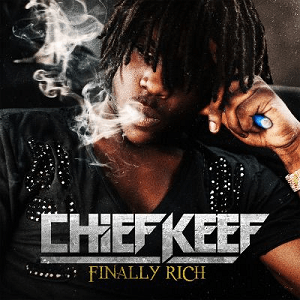
There’s so much more intensity and hype with Chief Keef’s music compared to almost everything else coming out in the early 2010. The Chief Keef/Young Chop artist/producer duo is really only rivaled by Waka Flocka/Lex Luger in terms of energy, and Waka’s aggressive, Southern, crunk influences don’t feel the same as Keef’s overbearing Chicago drill style.
Finally Rich reminds me a lot of 50 Cent’s Get Rich or Die Trying, not in terms of sound exactly, but because they’re albums with big hits and big misses that achieved “classic” status because of how they started an unexpected explosion of interest in the niche hip-hop movements they were a part of, despite some repetitive techniques and obvious flaws.
Repetition really is the key to what makes Keef’s best songs work. He says “That’s that shit I don’t like” around 40 times on “I Don’t Like” (as if I actually had to say what song he says it on), and you sing along with him all 40 times. He says “Sosa” about 20 times above deep, plodding bass and fluttering percussion. “Sober” is said 27 times on (you guessed it) “I Hate Being Sober,” a cool song featuring 50 Cent and Wiz Khalifa.
Other features on here from these big, aggressive kind of drug personalities like Rick Ross, Jeezy and French Montana match Keef’s energy nicely as well.
I will say, the repetitive lines and Keef’s droning, kind of emotionless delivery can sounds stupid or childish. Plus, the beats are mostly derivative of each other. And there aren’t too many lines with particular meaning found anywhere on the album. Still, about half the tracks somehow work.





 Fresh Out The Deli