After spending the better part of a decade working with EL-P as part of Run The Jewels, it’s appropriate that Killer Mike’s comeback solo record is simply titled MICHAEL.
On MICHAEL, Killer Mike takes us back to his roots, not just with personal stories of growing up and his family, but spiritually and musically too. Gospel and soul elements mix with modern southern hip-hop drums, bass and guitar melodies that bring us back to Atlanta. Collaborators who worked with him in the early 2000s like Andre 3000, CeeLo Green and Jagged Edge are back, as are more recent Atlanta stars like Young Thug, 2 Chainz and Future.
While I still feel that Run The Jewels showcases Killer Mike’s punchy political lyrics, humor, swagger and energy best, working as part of a duo can limit an artist’s ability to to deliver a more personal message. This is a welcome return to the past, and with his added experience and maturity, he’s unlocked something that feels both fresh and familiar.
“Scientists & Engineers” is probably the big hitter here, with solid features and electronic elements co-mingling with groovy bass and soulful harmonies, but “Run,” “Down By The Lawn,” “Exit 9” and “Don’t Let The Devil” are all as solid as they come. There are some moments that don’t pack as much of a punch as others, but it’s a well rounded hip-hop record by one of the best voices in the genre.
Despite having an indie following, and vocalist Hope Sandoval appearing on various shoegaze and electronic records since the mid 1990s, Mazzy Star is probably considered a one-hit wonder by most. “Fade Into You” is the star on So Tonight That I Might See, the band’s second studio album, and anyone who tells you otherwise is trying too hard to be different. It’s a great, grippin album opener, and it’s a song that really well defines the soft rock ballads of the grunge era.
So Tonight That I Might See exists very much in its time period, and has a lot of sounds and aesthetics that I like in 90s grunge, shoegaze, alternative rock and old country, especially over the first four tracks. The dream pop inspired “Bells Ring” reminds me of “The Cross” by Prince, featuring a slow, spotlight vocal performance that builds up by the end. “Mary Of Silence” taps into eerie, dark trip-hop vibes a la Portishead or Massive Attack (who Sandoval will work with in the future), but without any of the electronic elements. “Five String Serenade” is a cute, simple acoustic track that’s a little warmer than the others but still has a very personal and stripped-down feel to it. The violin lines on it are really quite lovely.
But, while the album has a lot of pleasant, calming moments, it’s the same three kinds of songs at essentially the same tempo over and over again, with diminishing returns each time. The songs are still tender and pretty, but without that energy or noise you’d usually find on a dream pop or shoegaze record, it drags. I think that’s why I prefer a lot of Sandoval’s features over her work here, because she brings that great voice and intimacy with her whenever she goes, but with added electronic elements or guitar layers she can still stand out without being left to carry the entire track on her own. “Unreflected” and “Into Dust” are alright on the back end, but hardly make it worth exploring fully.
Over the past 5 years or so, there have been a number of these super online sounding, schizophrenic kinds of albums with wild mood swings, genre and tempo switches and hyper, sometimes synthesized vocals, that can be both captivating and baffling.
Wallsocket, a concept album by April Harper Grey, aka underscores, is probably the best of them I’ve listened to, excelling because the swings feel more purposeful than many of the other records like it, which oftentimes come across as as too noisy, chaotic or weird just for the sake of being meme-ish.
Even though Wallsocket is full of hyper pop energy and youthfulness, the instrumentals are interesting without being overly glitchy or synthesized — with underscores drawing musical elements and swagger from different eras of pop, rock, electronic and even country music. Most of the tracks are either these catchy, upbeat bangers that’ll make you want to rock out, or these dark, really reflective ballads. Somehow, she does both equally well.
underscores biggest strength, though, is that she really knows how to write a hook. You’ll have a blast singing “When’s the last time you saw someone with a ski mask and a gun?” and she tells you how she robbed a bank as an inside job on the energetic opening track “Cops and Robbers,” which uses fast drums and punk-style guitars before an abrupt time change for a slower, more glitchy electronic middle section that builds back up for a thrilling rock conclusion. The fusion of dance pop and pop punk on “Locals (Girls like us)” will really get you moving, singing and clapping along to the chorus, as will the synth-rock elements on “Old Money Bitch.” “Seventyseven Dog Years” and “Shoot to kill, kill your darlings” are delightful tracks with 1990s-influenced indie pop percussion and acoustic work. And of course, you’ll be singing along to the infectious melody and chorus of “Johnny, Johnny, Johnny” until you realize it’s about an 11-year-old girl getting seduced by an adult online.
“Geez louise” is the most ambitions (and longest) song on the record, with four distinct parts that all work together really nicely: an aggressive pop punk opening, then an acoustic, western, outlaw verse that fades into a soft, tender, dream pop sections that build to a grand, loud wall of sounds by the end.
Those high-energy moments are counterbalanced nicely with the soft songs. The ballads use slow guitar, ambient pop effects and surprisingly moving lyrics that make for some highly emotional moments that are oftentimes eerie and isolating. “Duhhhhhhhhhhhhhh” and “You don’t even know who I am” are probably my favorites of the set.
It’s not a perfect record. At points, the mix does get a little muddy and loud. And, at 53 minutes in length, there is a lot to digest, from the detailed narrative underscores is trying to tell, to the different layers of instrumentation thrown at you back to back to back. But it’s definitely a fun ride.
Me chama de gato que eu sou sua is a quick, feel-good record by Brazilian, non binary artist Ana Frango Elétrico, who blends smooth jazz, funk and stings elements together to form these lush, dreamy instrumentals that feel like the soundtrack for a transition sequence in a James Bond movie in the 1970s.
Some post-bossa nova instrumentation and effects that tie back to their Brazilian roots give the album a very laid back, chill vibe, with guitar parts that sound like they’re from 70s funk songs at times, and vaporwave indie pop songs at other moments.
While the vocal performance is really great, I know an album that’s primarily sung in Portuguese is probably going to be a no-go for many people. But at the very least give the two English tracks here a try — the bright, groovy dance opener “Electric Fish,” which is one of my favorite songs of 2023, and the slow disco track “Boy of Stranger Things.” The delightful closing track, “Dr. Sabe Tudo” is well worth your time, too.
Reforming as a supergroup for the first time since they released their 2018 debut, Julien Baker, Phoebe Bridgers and Lucy Dacus returned as boygenius in 2023 to release a proper full-length record that has a lot of heart and charm.
I feel like a bit of a broken record whenever I talk about any of Julien Baker, Phoebe Bridgers and Lucy Dacus’ solo albums, so it isn’t too surprising that I feel similarly about the record. The vocals are good, the lyrics are perfect for the audience they’re trying to reach and the message is exactly what they want to send. But, similar to most of the collective’s solo projects, I wish the music was a bit more dynamic here and there to really emphasize those well done soft, tender moments.
The rock songs and overall sonic palette of the record is pretty generic, leaning heavily on the production that Julien Baker used on 2021’s Little Oblivions, which itself drew from some 2005-2012 pop rock — like Death Cab for Cutie’s Codes and Keys, U2’s How To Dismantle an Atomic Bomb and Viva la Vida by Coldplay — that uses a lot of backing synths and soft, echoing guitar and piano textures.
It’s a good, safe style when done right. “Not Strong Enough” really rocks when it gets going and best showcases the trio’s abilities as both musicians and songwriters. Its anthemic nature is appropriate for the “Always an angel, never a god” repeated bridge, which, when added with the final chorus, is probably the most impactful moment on the entire record. “True Blue” starts with a nice acoustic riff, simple drum track and builds wonderfully with their harmonies and synths throughout. “Satanist” has a bit more of an edge to it, with a fuzzy guitar part, a really heavy mid section that you could almost imagine some screaming on, and a back-end tempo slowdown that brings the track home using those backing synths again. I would have loved to hear a bit more of that rawness on the record.
But for a group that’s beloved in the indie world, the more conventional template feels flat at times, like on “$20” and “Anti-Curse,” which are a bit uninteresting and could have benefited from some of the horns and strings found on Bridgers Punisher or some of the noise Dacus can sometimes bring when she wants to. It is a shame, because the other seven songs on the album could really benefit from some of the higher energy moments really paying off.
The obvious ballads — “Without You Without Them,” “We’re In Love,” “Letter To An Old Poet,” “Leonard Cohen,” “Cool About It,” “Emily I’m Sorry” and “Revolution 0” — are all essentially the same kind of simple, soft, singer-songwriter showcase, without much of a musical build or resolution. I’d be lying if I said I thought any one of the tracks was actually bad, because boygenius does soft ballads well, but too much of it feels same-y to me, especially without those rockers mentioned earlier hitting on all cylinders.
Of the seven ballads here, “Revolution 0” is probably my favorite musically. The subtle electronics and piano notes give the song some color on its softer moments, and a slight build and noise like the violin melody near the end really help fill out the sound a bit. The other stand out is the album’s closing song, “Letter to an Old Poet,” which has all three artists singing in harmony for most of the track, with these lovely violin screeches hanging over a soft piano melody. The track also references their breakout 2018 song “Me & My Dog,” which puts a nice bow on the project.
Contra’s a bit of a mixed bag. Every song has a little bit of charm to it — like a horn melody or playful guitar riff in the background or light electronic production — but some songs feel mechanical and flat musically compared to Vampire Weekend’s debut before it or their albums after it.
I love the ridiculousness of Ezra Koenig’s over-the-top vocals on the chorus of “White Sky” and the playful bleeps, claps and drums that form the beat. “Cousins” is a fun, chaotic rock track with some frantic guitar strumming, that’s followed by the album’s best song, “Giving Up the Gun,” an upbeat track which has this cool combination of a synthetic sample and a guitar texture that leads up to a cute chorus with bells and soft vocals. I’ve also kind of grown to love “Diplomat’s Son” in almost a sarcastic way, because I really thought it was lame and too long when it first came out but I’ve been singing it to myself for years since.
Somehow, Contra is actually a very singable album because of Koenig’s off the walls vocal performance, and you can sing along endearingly or mockingly and have a good time sounding terrible while doing it. At times the performance works, but it doesn’t always lead to a good song. The quick-fire delivery of “California English” is interesting but the song’s a bit of a mess, and I’ve always found “Holiday” to be an obnoxious track (it being in car commercials for three years in the early 2010s probably didn’t help).
The less energetic tracks — “Taxi Cab,” “I Think Ur A Contra,” — don’t do much for me and feel emotionless for what’s supposed to be a more tender moment. And while “Horchata” is an adorable beach tune that gets the record started and “Run” has some charm to it as well, they don’t really stack up to the rest of the band’s catalog.
There’s beauty and innovation in every one of Sufjan Stevens’ releases, but Javelin brings all the best elements of his career together into one package. It has the old-world folk whimsy of his early years without the hokey aspects, the musical complexity of Illinois without the drawn out moments, the grand explorations of Age of Adz without the weird, out of place noises, and touching beauty and lyricism of Carrie & Lowell without the overwhelming sense of dread and despair. It’s him operating at his highest and most refined level.
Yes, like Carrie & Lowell eight years before it, Javelin is about loss and grief, and the opening “Goodbye Evergreen” is one of the most weighty of the tracks, but the entire album feels and sounds more like a celebration of life and love instead of inescapably dwelling on the past. Maybe it’s because Stevens addresses it through metaphors and imagery about nature — referencing mountains, trees, seasons, animals, the wind and the city — rather than direct personal details. Or maybe it’s the delightful guitar and pleasant strings and electronics that accompany Stevens’ familiar and always captivating vocal performance even during the album’s darkest moments.
“A Running Start” is a charming and playful start to a relationship. Musically, “Will Anybody Ever Love Me?” “Everything That Rises” and “Genuflecting Ghost” are classic guitar-driven Stevens songs with a lovely, quick-picking acoustic guitar with strings and backing vocals. “My Red Little Fox” sounds like a medieval poem. “Shit Talk” is the most ambitious and the most powerful. Multiple sections of repeated lines — “I will always love you,” “Hold me closely, hold me tightly lest I fall” and “I don’t want to fight at all” — carry the song. The ethereal, ascending organ outro maybe is a little too direct a symbol for rising to Heaven after death, but it’s still a beautiful passage.
It’s such a fully developed record and jam-packed album, it’s kind of amazing it’s only 42 minutes long. Oddly enough, the cover of Neil Young’s “There’s a World” is a perfect closing track that summarizes the album’s themes. “There’s a world you’re living in, no one else has your part. All God’s children in the wind, take it in and blow real hard.”
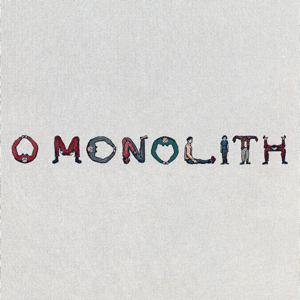
With O Monolith, Squid puts together a tighter album that cleans up some of the meandering moments on the band’s 2021 debut,Bright Green Field. In doing so, however, some of the character of the first album is missing, replaced by more heavy-handed production and intricate math-rock elements that can really wow you at times but don’t always get where I want them to go.
The standouts on the album are “Swing (In a Dream),” “Undergrowth” and “The Blades.” On “Swing (In a Dream),” pivoting guitar lines syncopate through an irregular time signature, drum features and soloing trumpet melodies break up the verses, and an undercurrent of deep synths create a rich, full sound, while Ollie Judge opts for a more traditional vocal delivery that heightens the seriousness of the track. The creaky guitar riffs and swagger on “Undergrowth” match more of the tonal energy of the band’s debut, with more sounds like bells and synth strings that complement the brass section as the elements slowly fold together over the course of the track. “The Blades” uses intricate staccato guitars and a combination of drums and sound effects to build towards an explosive rock climax and shows off Squid’s full potential as songwriters and innovative musicians.
A lot of that innovation and experimentation is shown throughout the record, but sometimes it doesn’t fully work. “Siphon Song” has what should be a good build, with a big, rewarding finish in the end, if you have the patience to sit through it all. “Green Light,” has a really cool, intense presentation but probably could have used a little more to build up the tension.
Overall, it’s easy to appreciate Squid’s technical prowess and their growth and maturity in sound from one album to the next, but they need to find a way to capture the rawness of the first record with the richness of the production on this one.
On Cave World, Viagra Boys channel the energy of a drunken Iggy Pop singing sarcastically about conspiracy theorists and internet trolls over new wave and alternative dance music. It’s fun, it’s funny, it’s energetic, it’s abrasive and it’s creative, with the music bouncing around genres and not-so-subtlely mimicking notable bands and songs.
Aspects of Talking Heads can be found in the music on “Baby Criminal” and vocals of “Troglodyte.” “Punk Rock Loser” and “Big Boy” are clearly Iggy Pop rip offs (I say endearingly). Alternative dance punk tracks “Ain’t No Thief” and “ADD” have elements of Nine Inch Nails and LCD Soundsystem. It’s impossible not to hear the Beastie Boys’ “Sabotage” in “Return To Monke,” and “The Cognitive Trade-Off Hypothesis” even pulls from Nelly Furtado and Timbaland’s 2006 hit “Say It Right.”
It almost perfectly represents the chaotic unrest and frustrations surrounding the Covid-19 pandemic, where people searched for nostalgia, weird ways to express themselves and could easily get lost in their own worlds. Constantly returning to ape and evolution (or unevolved) imagery to tackle anti-vaxxer rhetoric, school shooting and phony warriors that stand up against cancel culture, the lyrics are brilliant and funny, even if they make you confront the uncomfortable realities of modern-day society.
To call Zooropa a misstep for U2 would be unfair. It would be tough for any album to match the success and status of Achtung Baby or Joshua Tree; anything coming after was sure to mildly disappoint, at a minimum.
U2 had to evolve a little as a band, and the introduction of more synthetic sounds on Zooropa was a good way to ease fans into the vision the band had for the more abstract and electronic albums to come later that decade, before they returned to anthemic pop rock in the early 2000s.
The album itself actually does sound like a cohesive work, so Zooropa’s problem isn’t the modified style as much as its inconsistency in the quality and execution. As a result, we get a combination of these really ambitious, over-the-top, kind of interesting but weird songs, mixed with these safe, sometimes uninspired alternative rock tracks. Some of them are really enjoyable and others quite forgettable.
The opening track of the album is one of the more interestingly structured tracks in the band’s catalog, and does set you up for what’s to come later. U2 packs three distinct song sections — each with their own style and tempo — into a 6 and a half minute track, starting with a slow, ambient, instrumental Brian Eno-influenced atmosphere setter, then a smooth, underwater sounding section where Bono singing in a zen, almost meditative way and finally, a quick outro that matches the energy of Achtung Baby’s best rockers.
“Lemon” — a looped electronic dance number with crazy falsetto performance by Bono and backing vocals by the Edge that juxtapose one another — is one of my favorite U2 tracks. The song starts building right away, and gets more and more detailed and beautiful as the synths surround you. It’s a song that feels like it could go on forever and build endlessly. No, it doesn’t sound like typical U2, and I love it.
For ballads, “Stay” and “The First Time” are simple, but some of U2s most touching. They’ve got a conventional, radio sound, but the subtle instrumentation of soft guitar and backing synths just works.
The rest of the record though doesn’t really grab me. Babyface,” “Dirty Day” and “Some Days Are Better than Others” are forgettable mid tempo tracks that have a bit of a groove to them and sound like Achtung Baby B-sides reworked with 1990s electronic sound effects. “Numb” — an awkward and lethargic, spoken word track with The Edge rapping lead vocals over a fuzzy, electric guitar loop — is just a miss for me. Even if the production and harmonies build at the end, it feels like a song that’s intentionally weird but unintentionally uninteresting. I get that the song is called “Numb” a reason, but lethargic doesn’t usually lead to a hit.
“The Wanderer” is a fine song featuring Johnny Cash on vocals, but doesn’t really sound like U2 or classic Cash. It’s a nice tribute and moment, but one that would have been better as a rough single or B-side instead of as the album’s closing note.
“Daddy’s Gonna Pay For Your Crashed Car” is kind of fun and different, and I dig the sound effects, but lyrically it’s nothing special, and the synthetic backing track does the heavy lifting instead of any of the performance.
Overall, Zooropa may have been essential for the band’s growth and has contributed good moments at concerts, but it’s one of U2’s least essential projects to dive deep into and is probably my least favorite of their works up until the band was way past their prime. But, it’s worth exploring the innovation and tenderness on the best tracks.





 Fresh Out The Deli