BRAT – Charli XCX

YearAlbumArtistStarsScoreGenre
2024BratCharli XCX★★★½78PopDance Pop

Charli XCX has probably become my favorite pop artist of the past decade. The base quality of her tracks is so consistently good – they’re fun at the very least, and often time reach greatness.Her sixth album, Brat, is no different. 

Like her last record, Crash, this one is focused on club and dance tracks, but it doesn’t rely as heavily on nostalgia and samples to capture a mood. The production on Brat is clean and well done throughout and almost relentlessly hard-hitting.

Lyrically, Charli goes more introspective, personal, and a little more serious than usual, even though themes of partying and relationships are still prominent. She sings a lot about what feels like real relationships, with some specific imagery on songs like “Girl, so confusing” and “So I,” which is a tribute to her late producer Sophie. 

Honestly, I don’t think the lyrical emphasis adds anything to the record. Some phrasing feels choppy delivery-wise, where she’s a bit too offbeat for my liking to fit a specific word into a tight space. Some concepts come across as bland, like “Rewind,” and when the concepts could hit harder, some of the lyrics are very surface level, like on “I Think About It All the Time.” It’s a lot of saying exactly what she experienced, exactly where she was when something happened, and exactly how she felt about it. There isn’t much poetry to it, and she doesn’t leave much to the imagination.

However, this doesn’t hurt the album much either. I don’t typically go to Charli for her lyrical prowess or unaltered vocals. I come for the club anthems, synth chord progressions, bubblegum bass, synthetic vocal harmonies, and the emotion and energy that comes from it all. 

The aforementioned “I Think About It All the Time” sounds gorgeous and musically is a great closing sentiment for the record. The lyrical awkwardness on “Girl, So Confusing” might actually help the quirky track. “I Might Say Something Stupid” doesn’t do much for me but provides a musical breather from the other chaotic tracks, making it a welcome tonal shift to transition into the second leg of the record.

“Talk Talk” is the best track here, hands down. It has by-the-book club production, with spotlight violin synths building to full chords and a very catchy, repetitive chorus. The closing bridge really brings it home. “Everything is Romantic” is the most ambitious song from a production standpoint, starting with an orchestral sample that morphs into a booming, driving beat. It’s pretty cool and detailed.    

Almost every track on here is hit quality. Bouncy single “360” and its sped-up and chopped remix “365” are fun. “Club Classics” starts with a pounding Underworld-like drum beat and builds to bright, bendy club synths. “Von Dutch” is a short, revving package of energy. “Apple” isn’t as explosive but is a nice summer track that would fit nicely on any of her past records. “Mean Girls” has some roaring synths that juxtapose pop rock piano passages.

I think the album is fun overall, but while I like most of the production, it is pretty safe from a creative standpoint. If the “risky” part of the album was the lyrical depth, I’m not sure it was executed well enough to elevate the project beyond being just a good, made for radio pop album.
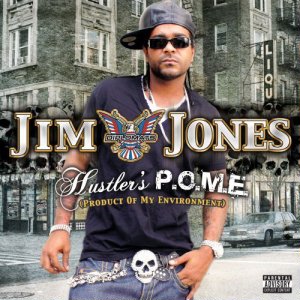
Hustler’s P.O.M.E. (Product of My Environment) – Jim Jones

YearAlbumArtistStarsScoreGenre
2006Hustler’s P.O.M.E. (Product of My Environment)Jim Jones29Hip-Hop

“We Fly High” is an iconic 2000s hip-hop song, but the strength of a single can’t always save an entire album, and on 2006’s Hustler’s P.O.M.E. (Product of My Environment), Jim Jones falls into many of the traps associated with mid-2000s hip-hop releases.

The album features a bloated tracklist that runs for an hour and 15 minutes, with over 20 tracks. Most songs are around five minutes long, often including one or two extra verses filled with largely meaningless ad-libs. Jones frequently references his past hits in a way that feels almost exploitative, and his constant name-dropping and shout-outs often replace substantial lyrical content, making the listening experience grating at times.

There is a lack of meaningful verses, with Jones often talking about himself and the culture without much depth. The beats also lack variety. They feature high-pitched samples and MIDI horns that sound dated and behind the times compared to the more lush production of other albums from the era, like some of the sounds coming from southern hip-hop or Kanye West’s production from 2003-2007. The production is aggressive and in-your-face, but it’s all bark and no bite. Loud production and booming beats do not necessarily make the songs exciting or energetic; most tracks sound flat and stagnant, lacking progression, movement, or emotional depth.

Jones is the real problem here though, not the music. A few songs like “motionless” and “Reppin’ Time” are fine tracks, but the potential of songs like “Reppin’ Time” in particular were unlocked when artists like Lil Wayne rapped over them on their mixtapes. “Love of My Life” isn’t particularly a good song, but its gentler approach and melodic chorus —  even if poorly sung —  make it a refreshing change after the repetitive and head-pummeling nature of the first half of the album.

Overall, Hustler’s P.O.M.E. (Product of My Environment) suffers from its excessive length, lack of lyrical depth, and repetitive production, failing to deliver a compelling listening experience.

Dark Times – Vince Staples

YearAlbumArtistStarsScore
2024Dark TimesVince Staples★★★★½92Hip-Hop

Vince Staples is one of the most understated and consistently great rappers of the past decade. From 2014 to 2024, he’s released six albums and two detailed EPs, with only one — 2016’s Prima Donna — being less than stellar (even that EP had some standout moments).

Since 2020, Staples has produced shorter, well-crafted projects that focus on single styles or concepts. FM! in 2018 was a 22-minute tribute to the radio stations he grew up listening to, filled with quick-hitting, upbeat summer tracks that were conceptually deep but light and easy on the ears. His self-titled, post-pandemic record in 2021 was less accessible musically — featuring darker, fuzzy production that I loved — but was equally smart and lyrically emotional. The following year, he produced another conceptually similar record but brought in producer Mustard to give it more life and danceability. It wasn’t a “commercial” project, but it had those vibes if you were looking for them.

Dark Times is the culmination of everything Vince Staples has done before. The production is subtle, mixing dark tones, entrancing guitar and piano riffs and with just enough summer, West Coast bounce to give it energy. His hooks and lyrics are catchy in the deadpan, sometimes aggressive, and self-deprecating ways that only Vince Staples can deliver. 

The standout element, though, is his deeply personal and specific storytelling, which evolves from the beginning of the album to the end and focuses on a few common themes.

The opening song, “Black&Blue,” serves as a mission statement and description of the album’s title. The album discusses Black struggles, systemic poverty,  and the realities of expectations placed on Black men in everyday life and within Black culture, like hip-hop stardom. Vince discusses burying his older brother, talking to a friend in jail, being a money tree for his community and friends, and feeling like a martian who was accidentally dropped off in the ghetto, but growing to love where he’s come from despite the possible dangers and challenges.

This theme mingles with Vince’s relationship with the women in his life. Vince mentions how disappointing it is that it’s easier to get a woman to sleep with him than to give him a hug. There’s an interlude where a woman tells her husband to lie to her and pretend to be happy because it’s what she needs. He follows this with “Justin,” a short, specific story about meeting a woman, having an instant connection, going up to her apartment, and discovering she has a boyfriend. “Women lie a lot” is the inevitable conclusion and deadpan hook for the song.

On “Radio,” Vince talks about breaking a woman’s heart, although it sounds like he’s the one with heartbreak. She tells him she doesn’t listen to rap because no man should speak to a woman the way they do in hip-hop. She explains, “The woman is the key to the Earth and she is the one that gives birth,” and when Vince dismisses the notion, she leaves him. He then listens to songs about heartbreak, mostly by women, marking a turning point for the album. The final track is a spoken-word interview with Santigold, where she elaborates on that idea — “woman is the key to the Earth” — and reiterates Vince’s idea about sex being easier to achieve than support, compassion, trust, and friendship. The use of women across the album to explain concepts and deliver hooks and backing vocals — from Baby Rose to frequent collaborator Kilo Kish — further emphasizes their importance in Vince’s life.

Another theme that makes the album highly personal is the numerous references to Vince’s past works and influences. The chorus on “Étouffée” — by far the best song on the album — pays homage to New Orleans hip-hop artists like Birdman, Mannie Fresh, and Soulja Slim. The track also references his albums Big Fish Theory and Summertime ‘06 as pinnacles of his craft that are used by critics and fans and barometers of his newer music. “Government Cheese” uses the same screeching synths as his breakout 2014 single “Blue Suede.” “Radio” also references Big Boy’s California morning show, a central theme for 2018’s FM!, and a number of the artists and music styles that inspired him. Tracks like “Little Homies” remind us that Vince could easily make a record full of danceable, radio hits if he wanted to.

Ranking Vince Staples’ entire catalog is challenging because each project brings something different and is essential for understanding him as an artist. However, Dark Times might be his best. Its 35-minute runtime makes it more fulfilling than FM! and his self-titled project or EPs, without introducing some of the bloat of Ramona Park Broke My Heart or the heft of Summertime ‘06. While Big Fish Theory’s experimental production made it shine, the lyrics, evolving themes, and interesting but accessible production of Dark Times make it an almost seamless record that you can throw on, let run through the end, and repeat over and over again. 

Beth Gibbons – Lives Outgrown

YearAlbumArtistStarsScoreGenre
2024Lives OutgrownBeth Gibbons★★★★½93RockChamber PopSinger-songwriter

Lives Outgrown is the first true solo record by legendary Portishead vocalist Beth Gibbons, and her first substantial release of music since the trip-hop band’s 2008 record, Third.

In comparison to Portishead’s iconic percussive, industrial, and electronic production, Gibbons here accompanies her lyrics with gentler compositions involving soft guitars, pianos, and swelling chamber instrumentation. These arrangements are reminiscent of a Jonny Greenwood orchestration or a Radiohead backing track circa Amnesiac or A Moon Shaped Pool.

What she does borrow from Portishead, however, are eerie atmospheric elements, occasional muddy horn mixes, and introspective lyrics about isolation and longing. Her themes of the passing of time, aging, grief, and approaching mortality are expected and welcome for an artist approaching her 60s who is writing music for the first time in more than 15 years. These themes are well-explored, and Gibbons’ still incredible and captivating vocals deliver lines with an outpouring of emotion.

On first listen, it takes a little while for the album to wake up because there is a lack of percussion or momentum, but once you orient yourself to navigate some of the dreamlike landscapes, every track becomes a gorgeous setting. Even though it’s a reflective and serious record, there’s hidden warmth and life throughout the album, especially in the orchestrations. “Floating In A Moments” is an early standout.

The middle part of the album has the most energy in a traditional sense. “Reaching Out” features the record’s only driving rhythm section (which I think is achieved mostly by mixing pizzicato strings and percussive hits of the bow and fingers on the body of the violin). These, combined with some dark, deep strings, create a foundation for sad upper-octave violin melodies, distant pianos, and splatting brass hits. The preceding song, “Rewind,” is another more aggressive track and is just as stellar. It isn’t as quick-tempoed but features epic, desert-like strings and North-African wind and percussion instrumentation, with some nasty, mucky backing guitars layered in.

Even if those two tracks are probably my favorites, energy and noise aren’t the point of this album. It’s the themes, delivery, and beauty found on songs like “Lost Changes,” “Beyond the Sun,” and “Whispering Love.”

Lives Outgrown is a great album. The only lingering question for me is whether it surpasses Portishead’s debut, Dummy, and deserves a higher score. Dummy is a vastly influential record in the alternative music and hip-hop worlds, with great tracks like “Glory Box,” “Sour Times,” and “Roads” that have stood the test of time over 30 years. While I doubt that people in 30 years will look back at Lives Outgrown as Gibbons’ crowning achievement (though it’s getting acclaim by critics, it may go unnoticed by most casual or newer music fans), composition-wise, it’s a more complete and emotionally rewarding album that deserves to be celebrated.

Scrapyard – Quadeca

YearAlbumArtistStarsScoreGenre
2024ScrapyardQuadeca★★★68Hip-HopNeo-Soul

Scrapyard is my first exposure to Quadeca, a former YouTube rapper and personality who has transitioned from a kind of goofy and humble DIY hip-hop nerd, known for freestyles and mimicking the flows of other emcees, to an artist with a unique style all his own.

It might be an odd entry point; Scrapyard is a mixtape composed of a collection of EPs, one-off singles, and B-side material that didn’t fit on Quadeca’s previous album. It feels like a mixtape because each song works on its own, and there are a few abrupt endings and awkward transitions, similar to the style of The Microphones in the indie world. But it showcases Quadeca’s evolving artistry and unique blend of influences. 

As those past YouTube videos showed, he’s a vocal chameleon able to channel many different techniques and to step in and out of countless genres and styles.  The music is based in hip-hop percussion but features indietronic electronic glitches, emo guitars and various pop builds. The results in a mixtape with elements from different trends in hip-hop over the past eight years or so: emo rap, psychedelic soul, internet-age DIY production, sentimental singing, and hype shouting processed with pitched-up cries.

The mixtape draws comparisons to Frank Ocean’s vulnerability and vocal quality, the psychedelic soul vibes of Yves Tumor, Playboi Carti’s panting and frantic delivery, and Flying Lotus’ bass lines. It features live violins, guitar, and flutes, and the softer songs hint at Brockhampton’s melodic moments. The mixtape’s lyrical content is sentimental and personal, matching the experimental beats and a bedroom aesthetic, especially evident in the more stripped-down moments like “Guide Dog.” The mixes are really muddy at times or incomplete, but beauty and sorrow shine through often.

Some fine tuning is required (and expected out of a mixtape of loosies), and by dipping his toes into so many styles, no one kind of song has a chance to shine or really make a push towards greatness. But, even if I don’t love every moment and think some of it is a bit over dramatic, Scrapyard is worth the listen to admire the flexibility and creativity to the craft that’s on display. Listen through, pick your four or five favorites, and enjoy. For me, the top tracks are the the glitchy “Dustcutter” and “Guess Who,” the upbeat “A La Cart” and the sentimental closer “Texas Blue” featuring Kevin Abstract. 

The Dream of Delphi – Bat for Lashes

YearAlbumArtistStarsScoreGenre
2024The Dream of DelphiBat for Lashes★★½59PopChamber Pop

Bat for Lashes’ sixth record, The Dream of Delphi, doesn’t offer much substance in terms of hooks or through melodies. However, the ethereal and emotional production is breathtaking throughout the album. Haunting backing synths and choirs, calming piano progressions, sax and MIDI riffs, and Natasha Khan’s vocalizing create soundscapes that evoke the natural world.

“Home,” one of the record’s singles, is the most memorable track, featuring a catchy, understated refrain and a piano progression that sweeps you up. The fuzzy, melodic synth bass on “Delphi Dancing” is also a charming standout.

Overall, the record leans more towards vocalizing as mood music, rather than the catchy, emotional, and upbeat chamber pop songs Khan has produced in the past. Nevertheless, as a concept and a tribute to her child, it’s more thoughtful and consistently executed than any of her works since 2012’s The Haunted Man. Its short runtime makes it an easy listen as well.

Vampire Weekend – Only God Was Above Us

YearAlbumArtistStarsScoreGenres
2024Only God Was Above UsVampire Weekend★★★★½92RockIndie Pop

Only God Was Above Us in a way is Vampire Weekend being their more Vampire Weekend-y. 

There’s a lot of baroque-inspired chamber music. There’s a lot of warm, boyish vocal melodies by Ezra Koenig and light, upbeat rhythms by drummer Chris Tomson and bassist Chris Baio. And while former bandmate Rostam Batmanglij is no longer with the band, his additional production work on this record and overall influence adds a layer of backing harmonies and synths that were clearly missing on the band’s last record, Father of the Bride, in 2019.   

The band’s pompous, classical music student quirks are cranked up as well. There are a lot of showy, melodic lines, whether it’s a quick guitar riff, a bridge made up of fast piano scales or repeated licks on a violin. 

Vampire Weekend have a few new things in their bag of tricks. Instead of the clear, blue skies of the past, the mix on Only God Was Above Us is a bit muddy at times and a little frantic. There are also outbursts of harsh noise, with screeching guitars, saxophones and layers of piano that abruptly, but appropriately, overwhelm your senses as the songs build. It’s like they’ve added a shot of espresso to the traditional Vampire Weekend horchata recipe. 

Many of the themes and melodies on Only God Was Above Us build off of their past material. The opening track is an instant classic, starting slow with some emotional and political lines before speeding up with a carefree, carnival-like energy, like a combination of “Obvious Bicycle” and “Unbelievers.” Then “Classical” sounds extremely familiar, like they took multiple early Vampire Weekend singles and threw them in a blender to drown out the outside noise. 

“Connect” and “Prep-School Gangsters” have a level of artsy pretentiousness and sophistication that only Vampire Weekend can really pull off, and they do it with aplomb. The loud, rock-forward “Gen-X Cops” sticks out on the record in a good way, and pulls part of its melody from the back end of “Hudson,” the lone slow, dark track on 2016’s Modern Vampires of the City

The final three tracks on the record really bring in the ethereal elements. “Mary Boone” has soothing backing synths, laidback drum loops and heavenly backing vocals and pianos you can melt into. “Pravda” has a hypnotic guitar riff and is loaded with cute musical accents. The closer “Hope” brings acoustic guitars, light pianos and a big buildup near the end for a great finale. 

Supermodel – Foster The People

YearAlbumArtistStarsScoreGenre
2014SupermodelFoster The People★★★½71RockIndie Pop

Supermodel might not have the hits that Foster the People’s seminal 2011 debut Torches had, but I think it’s actually a deeper, more rounded record overall that shows maturity beyond the bright, childish, hyper catchy, electronic indie pop the band was first known for. 

There are still catchy pop hooks on a number of songs here with sing-along passages, and the groovy syncopations and drums on “Best Friend” and  “Are You What You Want To Be?” will make you want to dance. Overall though, the band incorporates more straight rock techniques here. There are more quick, live drums, there’s a lot of guitar — both acoustic and electric — and much more dynamics, emotion and varying tempos. The indie pop elements don’t often steal the show, but come in to provide a glossy finish with arpeggiated, almost psychedelic synths, light keyboards and piano. 

“Pseudologia Fantastica” and “A Beginner’s Guide to Destroying the Moon” — the latter of which doubled as a beat on A$AP Rocky’s 2013 commercial debut Long. Live. A$AP — both are pretty intense rock songs that use some heavier synths to add to the noise. “Ask Yourself” is a quick acoustic guitar-driven song that, even with a pretty showy chorus, is more contemplative and serious in tone compared to anything on Torches. “Nevermind” and  “Goats In Trees,” are these slow but kind of on edge acoustic tracks with distant guitar sustains and light dream-pop keys that come in and out. 

The most synthetic song on here is probably “The Truth,” which has a deep, electronic synth that rumbles throughout in tempo and leads to this big, grand finale with lead singer Mark Foster bounding between a light falsettos and lower register as he’s surrounded by soaring computer chirps and blunt piano chords. That contrasts perfectly with the last track, “Fire Escape,” which I think is the band’s best song. It’s a soft, entirely acoustic guitar ballad with this repeated, gentle riff and simple, heartfelt lyrics. The best part is these light keyboard hits, cold bells and occasional backing vocals that add just enough texture and color to make the song’s emotion shine through. It does a great job of closing the album out in a really unexpected way.  

I know Torches set the bar for a lot of the indie pop movement in the early 2010s, with its crossover pop radio hits and warm, quirky additions. Even I go back to it much more frequently than I do Supermodel, because the nostalgia factor just transports me back to being in college and sitting by the poolside with “Helena Beat” or “Don’t Stop” blasting. 

But I think this 2014 release was unfairly panned when it came out because it wasn’t as intoxicatingly fun or warm as fans were probably expecting. Critics were also looking for reasons to dismiss indie pop as the genre grew stale and more generic over time. Maybe it’s not the most groundbreaking record, but Supermodel is an easy listen with a big payoff at the end and a lot of fun along the way. 

Kingdom Come – Jay-Z

YearAlbumArtistStarsScoreGenre
2006Kingdom ComeJay-Z★★½51Hip-Hop

After a three-year “retirement,” Jay Z returned in 2006 with Kingdom Come, a record that sounds exactly of its time in both good and bad ways. 

The production across Kingdom Come relies heavily on catchy, cleaned up samples of live instruments like trumpet, strings and melodic piano lines. The beats by Just Blaze and Kanye West sound pretty smooth and detailed, compared to the more straightforward, a bit heavier Dr. Dre beats scattered across the album that still have a consistent, manicured feel to them.   

Jay Z lyrically here doesn’t have quite as much of the punch as he once did. There’s a lot of fine lines bragging about his status and he sounds like he’s matured with his age beyond some of the more  street-level stories and rhymes he used to be associated with, but the creative dip lyrically and flow-wise compared even to The Black Album in 2003 is pretty noticeable. It feels like somebody who, over the years, has figured out a formula that works for him that he knows will sell without pushing the envelope.

Still, he can make songs that are really energized and fun, as the opening five songs display here.  “Oh My God” and the title track are these big, epic, in-your-face tracks that make you feel like you’re in a gangster movie title screen. “Show Me What You’ve Got” has a smooth saxophone and horn part that feels like you’re flying in a speedboat. “Lost One” follows that with a nice ballad with some good backing vocals and soft pianos for a more heartfelt moment. 

From there, it’s a mixed bag, with a lot of tracks that are forgettable. John Legend sounds good on “Do U Wanna Ride,” which was produced by Kanye West.  “Anything” has a cool Neptunes beat and fine Usher feature. “Dig a Hole” is laughably bad and “Minority Report” is lame and dated, with the latter incorporating news clips about Hurricane Katrina in a way that feels really forced and not at all clever or authentically sentimental at all.

I actually do enjoy the closing track “Beach Chair,” which is a weird, out-of-place non-single featuring Chris Martin from Coldplay on the hook. It’s got this cool, booming bass and clapping that echoes in a grand, larger-than-life way to complement Martin’s anthemic chorus, and Jay sounds pretty solid as well.

 It just isn’t old Jay-Z, and it shows how commercialized he and his contemporaries have become over the past decade compared to a song like “(Always Be My) Sunshine” which — when it was released in 1997 — was kind of considered a turn towards radio because of it’s Babyface feature and clean production. But that feels so much more of an authentic match compared to Martin, who was one of the biggest pop and rock superstars of the 2000s and is more a trophy of Jay’s achieved status than a necessary hip-hop element. 

Hip-Hop Is Dead – Nas

YearAlbumArtistStarsScoreGenre
2006Hip Hop Is DeadNas★★47Hip-Hop

Man, I held Hip-Hop Is Dead in pretty high regard in my mind for years because I really dug it when I was back in high school listening to it for the first time. But revisiting it now in full for the first time in about 15 years, it leaves a lot to be desired. 

“Hip-Hop is Dead” is still a cool song about the state of the industry in the mid-2000s, with dueling 1960s  drum and guitar samples that do a lot of the heavy lifting. “Black Republicans” was a huge deal at the time for bringing Jay Z and Naz together for the first time after their longtime rivalry and beef stemming from the mid 1990s. The track featured booming drums, braggadocious, almost super-villain-ish trumpets to build up the anticipation and fun, back-and-forth wordplay from both emcees. The two Kanye West produced joints here —  “Still Dreaming” and  “Let There Be Light” — bring smooth, cool production and softer, more reflective moments compared to the rest. And Snoop Dogg sounds good on “Play on Playa,” bringing together the 1990s’ east and west coast powerhouses.  “Hold Down The Block” and the darker  “Not Going Back” are average tracks on average beats. 

The rest of the record though is really forgettable. That has little to do with Nas — who I think does fine here and still shows off his lyrical prowess — and everything to do with the consistently bland, same-tempo and undynamic production. Maybe they sound worse because they’re put alongside some of the more exciting beats that are elsewhere on the album, but that run of four songs at the top is a huge bore. While Nas’ bars are good, he does have a very consistent flow and delivery that’s easy to appreciate but also get tired of, so the lackluster beats do little to add any excitement or to give you the energy to pay attention to what he’s saying. And the one time he tries to sound different — “Who Killed It?” — the song’s an absolute disaster.