Sundial – Noname ★★★★

YearAlbumArtistStarsScoreGenre
2023SundialNoname★★★★82Hip-Hop

A lot had changed in the five years since Noname’s last record, 2018’s Room 25. The world’s become more divided and conflicted. There was a worldwide pandemic and a presidential election. There were protests about race and women’s rights. People are quicker to attack others for their faults, more cynical about decision making and their situations.  

On Sundial, you can tell Noname has also evolved in those five years. What started as a young, charming poet talking over coffee-shop beats has grown into a full-fledged hip-hop performer, never holding back and constantly re-evaluating herself and those around her. 

Noname talks more bluntly about politics, relationships, rap cliches and music industry pressures, and the technical aspects of her wordplay and delivery have never been better. Now in her 30s, Noname’s voice sounds more adult compared to the soft-spoken persona she sometimes had in her early 20s. It’s more in front of the instrumental mix, more clear, more present. 

The different feature artists on the record all bring a different sound and energy to the album as well, adding new textures that complement Noname’s always reliable performance. Ayoni has a spirited, show stopping verse to open “boomboom.” Jay Electronica is still an overwhelming presence when he shows up on a song, and really fills the room on “balloons.” Billy Woods and Common represent conscious rappers really well on the final two tracks (the latter being one of Common’s best showings in years). 

Compared to the folks she had featured previously on Telefone and Room 25 — who felt like they fit her aesthetic perfectly but also didn’t add too much variety in sound and style — the new, more dominating voices take the record up a level.  

The production has taken a small step up as well. The songs still rely heavily on soul harmonies and jazz techniques, but feel more luxurious or grand than chill and DIY. You lose some of the quaintness that drew us to Noname to begin with, for sure, but the end result is an album that’s a bit more dynamic, a bit more conventional sounding in a traditional hip-hop sense and every bit as captivating. 

When I wrote about Noname’s debut in 2016, I compared her to Chance the Rapper, who had just experienced his mainstream breakthrough, Coloring Book. Both were mixtape rappers from Chicago. Both had worked with each other in the past. Both had a happy delivery, keyed in on nostalgic story telling, and used soul and gospel influenced production. But while Chance was finally enjoying time in the spotlight with his big-name guest features and grand presentation, Noname was championing the underground and understated. 

Chance The Rapper’s popularity pretty quickly faded after that, in part, I hypothesize, because the more cynical outlook his fans developed during the Trump presidency made them less enamored with his happy-go-lucky attitude. 

However, even though Noname now has a bit more of that firepower that propelled Chance originally, she has always had a different level of seriousness to her. Even if the music was upbeat, she knew the realities people were facing, and it allowed her to maintain her status even through the long, 5-year gap between full projects.

Among the crowd of newer artists with a similar approach who have gotten more prominent in recent years — whether that be Little Simz on the hip-hop side, or someone like Arlo Parks on the more laid back, indie R&B scene — Noname feels right at home, and is as relevant as ever. 

Genres and styles

Explore different genres through these playlists.

Been Trippin: Trip Hop Playlist

A cool collection of Trip-Hop classics by Bjork, DJ Shadow, Massive Attack and similar artists or the late 1990s like Radiohead. Best enjoyed when shuffled. Great for a grey, cold, winter day.

Madchester

Madchester is a niche genre from the Manchester baggy club scene that really only existed from about 1989-1992. Although brief, the movement did spawn a few classic songs and interesting acts. Combining elements of indie dance and psychedelic rock with prominent funk bass lines, the genre’s roots can be traced back to New Order, The Smiths, the Cure and the Fall, with a house twist thrown in.

In Times New Roman… – Queens of the Stone Age ★★½

YearAlbumArtistStarsScoreGenre
2023In Times New Roman…Queens of the Stone Age★★½57RockAlternative Rock

On In Times New Roman…, Queens of the Stone Age revert back to the basics of their 2000s-era albums, with somewhat mixed results. The more straightforward approach to alternative rock lends itself to a consistent sound and some solid single-quality tracks, but also makes the band more predictable. The songs lack the depth and detail found on their most recent efforts, Villains (2017) and …Like Clockwork (2013). 

“Obscenery” and “Paper Machete” are a solid one-two punch at the top of the record, with blunt drum work, bluesy riffs and screeching guitar parts that would fit in with others from Songs for the Deaf or Lullabies to Paralyze. “What the Peephole Say” has some great, raw energy despite the “trying to be funny” kind of title. The album’s closing track, “Straight Jacket Fitting” has some of the darker, twisted sounding elements that make their more recent efforts work. “Emotion Sickness” and “Carnavoyeur” work as fine singles that sound like quintessential Queen of the Stone Age tracks. 

In fact, the whole record is made up of songs where, five seconds into the track you say, “yup, that’s definitely a Queens of the Stone Age song right there.” But overall it doesn’t feel nearly as dramatic or dynamic as the band has in the past, and Josh Homme’s performance feels flatter than usual, resulting in a blurred, melded together experience start to finish without many true standout moments. 

Every song is solid enough, and I wouldn’t say there’s a bad track on the record, so I can’t give this lower than three stars or complain too much. But I was a little disappointed, and even at a 47 minute runtime, In Times New Roman… —like the standard, yet bland font it’s named after left me craving a bit more in the end.

Modern Vampires of the City – Vampire Weekend ★★★★★

YearAlbumArtistStarsScoreGenre
2013Modern Vampires of the CityVampire Weekend★★★★★95RockIndie PopChamber Pop

Listening to Modern Vampires of the City feels like being warmed by the sun at the beach on the first perfectly warm spring morning of the year. Maybe you’re thinking about the job you’re not happy with, or a problem in your personal life, or you’re disenchanted about everything going on in the world. But right now, your head is clear. You’re at peace in nature. You feel like you can be yourself. You’re having a good time. 

Vampire Weekend followed up their charming, catchy 2008 debut record with a sophomore effort in 2010 that showed some growth and continued to define their now recognizable sound,  but fell a little flat. 

In 2013, the band rounded up all the best elements of both to create an album with little fault. Modern Vampires of the City perfects their sunny, upbeat, indie rock style. Rostam Batmanglij refines the baroque chamber elements, sound effects and backing vocals. Ezra Koenig introduces more mature themes lyrically. Most importantly, the record maintains the fun, carefree nature of Vampire Weekend’s first two records that made the band so adored to begin with.  

Modern Vampires of the City doesn’t have any throwaway songs, and the top songs on the album — “Hannah Hunt,” “Diane Young” and “Obvious Bicycle”—are probably the three best tracks across the band’s entire year catalog.

Trouble will Find Me – The National ★★★★

YearAlbumArtistStarsScoreGenre
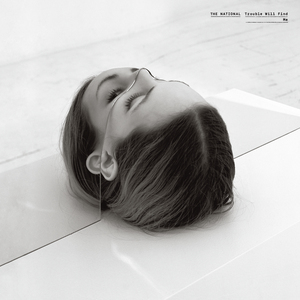
2013Trouble Will Find MeThe National★★★★86RockAlternative RockChamber Pop

Trouble Will Find Me might not be my all time favorite album by The National (I still think Boxer has the slight edge), but it probably best represents all there is to love about the band. 

Pleasant, up-beat songs with quick drums. Introspective, mid-tempo rock tracks. Memorable but not overpowering guitar parts. Beautiful chamber instruments that help the songs build in emotion and energy. Sad, singalong piano ballads about being drunk and broken hearted. And Matt Berninger’s baritone perfectly delivering poetic imagery. 

Every time the band puts out a record, there are a few standout tracks that quickly become part of my regular rotation, and Trouble will Find Me is no exception. “I Should Live In Salt” is a fabulous slow, building opening track. “Don’t Swallow the Cap” is an energetic single, with playful stings and backing vocals.  “Sea of Love,” “Graceless,” and “Humiliation” channel some of the rock energy energy from their previous albums, but feel right at home here on an album that has more warmth in its sounds overall. “Pink Rabbits” works as a great nightcap near the end of the record. 

Most of The National’s albums are on the longer side and inevitably have a few tracks I probably could have done without, but in my mind Trouble Will Find Me is their most consistent record start to finish. No individual track might be as iconically great as “Bloodbuzz Ohio” or “Mr. November,”  but every song is good, and each sounds exactly like what you’d want from The National.

Yeezus – Kanye West ★★★★

YearAlbumArtistStarsScoreGenre
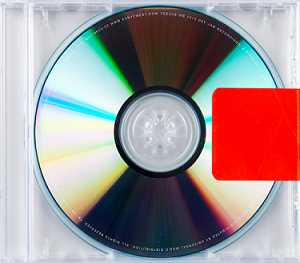
2013YeezusKanye West★★★★81Hip-HopAlternative Hip-HopElectronic R&B

Kanye West was on quite a run heading into 2013: My Beautiful Dark Twisted Fantasy in 2010, Watch The Throne in 2011 and Cruel Summer in 2012 showcased his skills as a producer, a lyricist, a curator of different talents and a hit maker.  

So when Yeezus came out and was anything but radio friendly, it was a head scratcher. Not because Kanye wasn’t one to switch his style up — he had done that plenty before —  but because it’s rare to see any artist intentionally steer away from the sounds that had clearly been working and successful so recently prior to the switch. 

Yeezus was void of warmth, filled with brash noises that echo back and forth across a sparse soundscape, with subwoofer hits so intense you can hear the vibrations, and samples so choppy it felt like you were standing under a propeller. Club beats were replaced by abrasive, whirling mechanical sounds. Big-name guest features were replaced by brief contributions by more indie names. And his frequently clever lyrics were abandoned for crude imagery, darker tropics and overindulgent metaphors. 

It all created a captivating mix of minimalistic layers and over-the-top noises, which was in contrast to the luxurious, grandiose production of Kanye’s past. Nothing felt like an obvious hit like “Power” or “All of the Lights” or “Paris” or “Mercy.” Nothing was as lushly produced as “Runaway” or “Devil in a New Dress.” 

From its opening moments, the album is constantly challenging the listener. Fuzzy synthesizers become confrontational staccato computer bleeps and bloops. Songs abruptly start and stop with character-changing samples thrown in with little warning. There’s plenty of silence between the notes and phrases.

The cool, electronic based production — unlike anything heard outside of U.K. Grime or maybe the very best of Shabazz Palaces — keeps you intrigued. The guests and samples draw you in. The over-the-top vulgarities force you to keep your distance at all times, or at least forces you to realize you’ll put up with a level of Kanye West’s insanity if it means enjoying Justin Vernon say “Star fucker” over and over again on top of pounding drums.  

West doesn’t get all the credit for creating the new sound. A lot of the darker production was influenced by Travis Scott, still an up-and-comer at the time and a co-producer on a few tracks. The glitchy, more dramatic moments show off Arca’s handiwork. The mechanical, electronic loops are courtesy of Daft Punk. No I.D. helps on “Bound 2,” the soulful and more conventional closer.  And West’s longtime co-producers Mike Dean and Noah Goldstein return to lend guidance here, as well as Rick Ruben. 

Hey, if you don’t like Yeezus because of either the dumb album name or the disappointing lyrics, or the untraditionally production, I get it. Yeezus was also the beginning of Kanye’s slow decline into…well…whatever it is he’s doing now. Still, it has a lot of catchy songs, highly compelling production, memorable moments and Kanye’s signature brand of humor, even if it is more crass than the albums that came before it.

Run the Jewels – Run the Jewels ★★★★

YearAlbumArtistStarsScoreGenre
2013Run The JewelsRun The Jewels★★★★80Hip-Hop

In 2013, respected by at-the-time essentially forgotten hip-hop veterans Killer Mike and EL-P joined forces to form Run The Jewels. Together, they created an album that felt 100 percent authentic to them and was sonically different from the trappy club and R&B hits other hip-hop acts were making at the time.

The personas they were able to create were a shot of adrenaline. El-P’s in-your-face beats could knock you out. Killer Mike’s verses were equal parts funny, personal, clever and political. And as a pair, their call-and-response rapping style — highlighting their New York and Atlanta roots — perfectly built from one line to the next with almost comical amounts of bravado in their voices.

The album is energetic, funny, self deprecating at times and serious at others. But the best part of RTJ’s debut is that Killer Mike and EL-P genuinely sounded like they were having fun, which rubs off on the listener. They knew they had unlocked something special and were having the time of their lives making the music they wanted to make.

Euphoric – Georgia ★★★½

YearAlbumArtistStarsScoreGenre
2023EuphoricGeorgia★★★½70PopIndie PopDance-Pop

Euphoric is a perfectly manicured, synth-driven album of mid-tempoed dance-pop tracks.

Georgia brings the charm and best electronic elements from the indie pop acts of the early 2010 like Robyn, Lorde and Chvrches, and mixes them with some modern, mainstream dance trends.  It’s not exceptionally groundbreaking, and despite the personal songwriting there isn’t too much depth lyrically, but every song’s fun, well put together and a joy to listen to. 

The two lower-energy songs — “Keep Going” and “So What” — are probably the album’s weak points, and both tracks coming near the very end of the album stalls things a bit near the finish line. But these softer moments — as well as the opening two tracks — do let Rostam Batmanglij’s production shine through, with ethereal strings and synth in the distance and Vampire Weekend-styled piano melodies sprinkled in. At 36 minutes, the album is a breeze even with the slight slow down.