Old is both a step forward (Side A) and a step back (Side B) for Danny Brown.
Compared to XXX, the production’s more electronic, dynamic and gripping, even though Danny continues to tackle (or maybe exploit is a better word) dark themes like depression and drug use. He better balances his high pitched, frantic vocals and more serious, natural voice. The added guest features help show Danny’s unique delivery and style compared to his peers, who provide nice verses without overshadowing him. And the softer moments like “Float On” and “Lonely” really shine.
The majority of Side A works. Freddie Gibbs goes off on “The Return,” which has a fun Outkast interpolation. “Dope Fiend Rental” has a cool drill-style beat and a fun, gritty Schoolboy Q feature. Even the feature from electronic indie-pop act Purity Ring sounds dark and cool on “25 Bucks.”
But, the club and party-centric beats on Side B come out of nowhere, and while Danny Brown matches their energy with his hyper performance, the mix doesn’t really feel natural or appropriate, and feels elementary compared to his best work. I wouldn’t say it’s commercial, but the dance elements definitely fill a different role than the other more traditional hip-hop tracks here. Stacking all of them at the end makes the second side easy to skip or avoid.
Don’t get me wrong, there are some cool moments (the wobbly vibes on “Dubstep,” for example) but most of it is pretty stupid and basic. There’s a fun chorus on “Dip” that isn’t really good but gets stuck in your head instantly. “Kush Coma” has a dumb, terrible chorus, but the beat goes kind of hard and Danny and A$AP Rocky are having a good time on it. Ab-Soul is good on “Way Up Here,” but the beat on that song, “Break It” and “Handstand” are all annoying. “Smokin & Drinkin” is also forgettable even if it’s energetic.
He doesn’t hold back any punches lyrically, hitting you with vulgar sexual innuendos, detailed recaps of excessive drug use and intentionally cringey/inappropriate pop culture references.
His nasally, hyper delivery is easily recognisable and hard to replicate, but he’s also able to whip out a more natural, serious voice when he wants to get down to business.
His dark and gritty beats match his fiendish energy and often primal depictions of drugs and sex, creating a stark contrast to his more commercial contemporaries, who spin a fairytale, chill image of drug and party culture most of the time. Many of the beats here directly call back to the low-budget asthetic from his mixtape days, uses flat drum and percussion, with glitchy electronic accents, aggressive loops or keyboards thrown on top to introduce a slight melodic flair.
The opening half of the record is solid, especially the opening six songs leading to “I Will,” which is the best track here. But as Danny more frequently reaches into his serious bag on the back half of XXX, the album loses some energy. Songs like “Nosebleeds” still sound cool, and “Party All the Time” is a great dark track, but at 19 songs overall XXX overstays its welcome a little.
He calls out the commercial rap game on “Radio Song,” which includes multiple references to hit tracks from the past few years. I appreciate his efforts to stay individualized and tied to his roots as an independent, underground artist, but even if Danny’s personality shines through, the record does feel like it’s missing some dynamics or high points that could have made it a little more accessible without jeopardizing Danny’s lyrics.
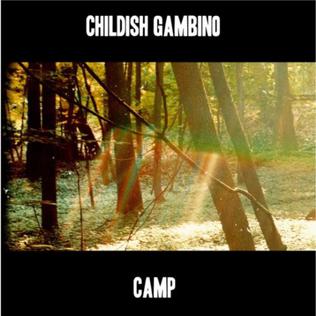
Childish Gambino’s debut studio album Camp is a bit of a mixed bag. The sitcom writer and actor turned rapper puts his creativity and personality on display, hints at a wide range of different influences and utilizes different vocal styles, while showing he still has a lot to learn as a lyricist and performer.
Donald Glover is clearly influenced as an artist by Kanye West, and is drawn to things like string samples, 808s and softer R&B and soul elements that allow him to both rap and sing. The more artistically produced tracks here like “Heartbeat,” “Les,” “Hold You Down” and “Kids” sound good and do a good job at showing off his creative and more sentimental side.
While Glover can clearly rap and sing, at times on Camp his style feels out of place or buried by a track’s production. “All The Shines” seems like a track that should work as a big, moving, emotional high on the record,but isn’t as seamless as I’d like it to be. He sounds solid on it when he’s talking and when he sings, but the beautiful strings in the instrumental gets a bit too epic and swelling, in a way that his performance gets lost and the transitions between song sections are choppy, especially with the loud, stomp and clap drums (which are used ad nauseam throughout the record).
His interests though in other internet rap groups like Odd Future or more lyrical emcees like those in Black Hippy sometimes leads him astray. This is especially apparent with the more angry or braggadocious delivery he uses on the record’s more intense beats like “Bonfire,” “Backpack” and “You See Me.” It sounds like he’s trying to rap fast or say kind of hard lines to prove that he can, not really because he wants to. The songs on their surface actually sound pretty fine and fun, but when you dig into them there isn’t much there, and the beats fill a role in a cookie-cutter kind of way while Glover’s just not up to the task as a wordsmith at this point in his career.
I do think Glover’s personality comes through on the record though, with a few pretty funny/clever lines and references to his interests like indie and electronic music and television. And his autobiographical lyrics do a good job talking about his current struggles and conflicts, as well as his past, how he was raised, how he acted out in class, how his interest in the arts and comedy led people to make assumptions about him both in his career and his efforts to become a hip-hop star. The bars aren’t always as punchy as I’d hoped and the same few themes get repeated across the album, but I’d say he sounds solid for the most part, and the album works to tell an audience who he is, where he came from and where he’s trying to go beyond his acting career.
On Cole World: The Sideline Story, J. Cole shows a base level of consistency and competence in all areas of his art: his lyrics, his production and his ability to craft an overall narrative across an entire work, and weave similar themes in and out of tracks.
Cole spends the bulk of his first record telling the audience who he is, where he’s from, who his heroes are and how thankful he is to have an opportunity to pursue his dreams and to finally show the world what he’s capable of. The storytelling is autobiographical and sounds authentic, with specific anecdotes about things like getting the call about being signed to a record label right before being pulled over and arrested.
But the lyricism here is pretty basic and doesn’t leave much to the imagination, its strength being that concepts are easy to follow and digest. His production is also pretty heavy handed at times, sounding almost like he’s trying to build a movie soundtrack for his life, with dramatic string sections, sentimental piano melodies and soft guitar textures. It makes the stories feel like they’re a concept for an episode of Boondocks. It’s a bit too much at times, especially with the simplicity of some of the stories.
Still, the concepts on the album are more mature and real than the majority of his peers back in the early 2010s, and he shows a self awareness of his faults and situation. “In The Morning,” which features Drake, is a pretty standard track about hooking up with a woman, but the following song then goes into the responsibility that comes with an unplanned pregnancy and feeling guilty about trying to convince a woman that abortion might be the best option for everyone. This is then followed by “Nobody’s Perfect,” featuring Missy Elliot.
A less extreme version of this also takes place on “Sideline Story,” where folks kind of doubt J. Cole’s chances at making it big, and ask him why Jay Z hasn’t given him a shoutout if Jay’s apparently so impressed with his work (Jay is credited for giving Cole his first big shot). That’s followed up by “Mr. Nice Watch,” a song with a Jay Z feature, where Cole brags a bit about his newfound fame and wealth over an aggressive beat.
There are a handful of tracks here that I like a lot — “Dollar And A Dream,” “Can’t Get Enough,” “Sideline Story,” “Nobody’s Perfect” and “Work Out” (even if it was played out on the radio) — although I wouldn’t say any of them are my favorites of the era, or close to my favorites compared to Cole’s future, more impressive catalog. Still, that connectivity and consistency across the record is appreciated and impressive on a debut record that’s a feel-good story overall.
I remember the first time I heard “Thrift Shop” on the radio. I was in the car with someone who didn’t like hip-hop but proclaimed, “This song is so fun!” The second time I heard it (about 2 hours later) a different person in the car said “They’re playing this on the radio? That’s weird, it’s been out for months. This guy’s stuff is good.” Then I heard it at a party that night and people started talking about how it was the best song of the year. Then I heard it at a gas station the next day. Then I heard it inside a Target. Then I heard it at a club the next week and drunk people went crazy all four times the DJ played it over a 2-hour period.
That’s how big it was and how quickly Macklemore went from an online, underground rapper who hip-hop bros thought was pretty cool, to a superstar that people, who didn’t even listen to hip-hop, would name drop to try to be cool.
“Thrift Shop” is a fine, fun, catchy song. I heard it enough that first week for me to never need to hear it again. And when “Can’t Hold Us” got big four or five months later, and was featured in commercials for new television shows and bumper music for every sports game, I got my fill of that too.
Macklemore and Ryan Lewis stayed hot all the way to the 2014 Grammy Awards, where they won Best New Artist, Best Rap Song, Best Rap Performance and, finally, Best Rap Album, over genre titans Drake, Kanye West and Jay Z, as well as Kendrick Lamar’s good kid, m.A.A.d city, the latter of which was considered as sure fire a thing to win the category as any record in recent memory.
And just like that, all hip-hop fans turned on Macklemore & Ryan Lewis, because those few fun songs everyone had enjoyed the past year and a half couldn’t hold a candle to even the worst tracks on good kid, m.A.A.d city, which had become such a slow building phenomena since it was released in fall 2012 that if you liked hip-hop, you couldn’t help but stumble into it and fall in love with it by the time The Grammy Awards arrived.
It’s not Macklemore & Ryan Lewis’ fault that they won an award that people frequently claim is meaningless and that’s selected by a voter base made up of people who don’t even listen to hip-hop beyond what crosses over to popular radio.
But retrospectively listening to The Heist (now aptly named), it’s even harder to stomach than it originally was, because beyond the first five tracks (which include the album’s three hit singles) the album slowly gets worse and worse.
It’s a warning sign when you click an artist and the main genres are listed as “Pop Rap” then“Comedy Hip-Hop” and then… “Conscious Hip-Hop”? They get the pop part right, but Macklemore isn’t particularly funny (what is funny is how some of the beats on the back half of the record almost sound intentionally unserious and unprofessional), and his lines aren’t particularly intellectual either beyond basic social commentary.
“Thrift Shop” and “Can’t Hold Us” are fun in small doses. “Same Love” calls out homophobia in hip-hop, which was a pretty big deal at the time and got Macklemore a reputation for being thoughtful, deep lyrics even though the actual message and lyrics kind of do the bare minimum. However, the piano track, warm backing vocals and lovely Mary Lambert feature are well done and make it worthwhile. The production and vocal medley on the chorus of “Thin Line” reminds me of The National’s “Apartment Story” bridge for some reason, which makes me like it. Other than that though, the rest of the project is forgettable, bland, sometimes grating and almost offensively uninspired.
Macklemore I’m sure still has pop fans who he’s held since the beginning, and he’s had other radio and streaming hits since 2012, but in the hip-hop world, The Heist wasn’t particularly special then, and it certainly isn’t now.
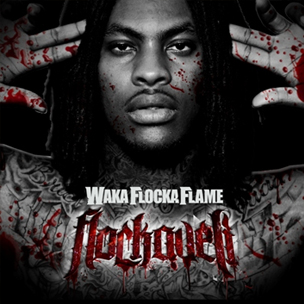
If after hearing the main singles from Waka Flocka Flame’s debut album Flockaveli you thought to yourself, “this record’s gotta be made up of dumb, mindless, hyper-masculine, repetitive nonsense with no depth and a bunch of beats that aim to do the same exact thing,” you’d… be pretty close to spot on. Yes, Waka is more of a hype man that repeats hooks and shouts than a detail-oriented emcee. Yes, the majority of tracks are produced by Lex Luger, doing his signature booming Lex Luger thing. And yes, the lyrics, even those introduced by feature artists, are elementary at best and play off tired cliches like partying and violence and sex and crime.
But reducing this album to just a surface-level academic evaluation of what should make a good or smart hip-hop album ignores how Waka approached the album with reckless abandon, and all the joy and energy and unbridled enthusiasm on display by all parties involved. Because from the very first moment of this record to the very end, it’s thrilling, captivating, ear-drum shaking and turned up to such a degree it’s almost unlike anything else.
Lex Luger bodies this project, bringing a level of consistency in sound and intensity that perfectly matches Waka’s personality. Each song he produces has a heavy, aggressive cadence that intensifies as it hypnotically circles round and round like sharks in a way that equally makes you want to dance and fight. The few other producers on the project are sprinkled in at the perfect times to prevent Lex’s formula from getting too stale, and add just enough diversity to keep things interesting while still being on message.
The singles do really capture the spirit of the project well. “Hard in da Paint” is the most intense, in-your-face song on an album that’s almost exclusively intense, in-your-face songs that became a viral, internet obsession. “No Hands” was a smash radio hit with a singable, memorable chorus by Roscoe Dash and a verse by Wale that gave him his biggest platform to that point. “Grove St. Party” is a more subdued club banger with bendy synths on top of booming bass hits.
But there’s something about listening to all the album’s songs back to back to back that elevates each one a little more. It’s a compounding effect of viciousness. “Fuck the Club Up,” the seventh track, is the first song on the album that’s really a mess. The vocals are kind of annoying and the beat is a little less intense, which I should be able to appreciate, but I just found it kind of uninteresting and a little boring compared to the rest. After that, though, “Homies” is a really well produced song that’s essentially Waka’s version of a slow jam, with an almost Timbaland-esque beat and spacy synths, while still maintaining energy.
The feature list on this record is also this weird graveyard of all these young and hopeful musicians from Bricksquad and places like Young Money and Maybach Music, who, for the most part, didn’t really amount to anything significant at all. There are a few memorable names, like French Montana, Wale and Roscoe Dash (who’s only really known for being featured on this record’s biggest hit ). Beyond that, we get YG Hootie five times, Joe Moses, Slim Dunkin, Popa Smurf and Kebo Gotti all twice, and one feature apiece for Suge Gotti, Baby Bomb, Gudda Gudda, Pastor Troy, Ice Burgandy, Cap, Ra Diggs, Uncle Murda, Bo Deal, Cartier Kitten and Mouse. Only four of those 16 people even have Wikipedia links to their name, and one of them (Gudda Gudda) just brings you to the Young Money roster. (To quote the great Patrick Star, “Who are you people?!?!”)
But, somehow almost all of them are welcome additions on this album. They sound energized and hungry, like they know this might be one of the best shots they have to impress someone and make it big. Most importantly, they all sound like they’re having fun, and add enough diversity in voices to distract from the fact that Waka Flocka Flame isn’t a particularly engaging rapper on his own.
I say that though, and two of the purely solo tracks here are solid (although the final track “Fuck This Indusrtry” just ain’t it). The first is the aforementioned “Hard In Da Paint,” while “For My Dawgs” is a smooth, confident track with a Three 6 Mafia kind of swagger.
With how repetitive it is, Flockaveli has no business being an hour and 12 minutes long, and you definitely need to be in the right mindset to be able to handle its relentlessness. But, this album has no business being as enjoyable as it is, so enjoy it.
In the opening moments of the second track of Ambition — Wale’s second album and first record as part of Maybach Music Group — Wale says he’s one of the best thinkers of his class of young emcees. I don’t know if I’d rank him as a top-level wordsmith or creative, but he’s solid enough, has fun ideas and interests and, when deep diving his contemporaries in 2011, Wale definitely stood out at the time as one of the most authentic and purely hip-hop new voices in the game.
Even though the beats are polished with an eye for the radio, the production throughout Ambition feels a lot more hip-hop forward than pop, which allows the record to stand the test of time more than so many others from the post blog-era. It’s a testament to executive producer Rick Ross and his team at Maybach Music Group to find beats that highlight his artists while giving them hits without making them feel like sellouts. Most of these tracks, even the ones with pop hooks or aesthetics, sound like songs vets like Ross would feel comfortable on (which is probably why he provides vocals on three of the songs).
The most blatant pop moments here actually skew toward the R&B side of things vs. poppy hip-hop, which makes them work. “Lotus Flower Bomb” is a joy and one of the best singles of the era. Miguel sounds heavenly on it, and the light, warm keys and floating electronics make it a great, chill morning track that’s easy to sing along to. “Sabotage” has a welcoming guitar riff, and the mix of Lloyd and horns on the chorus makes for a dynamic, emotional hook. “That Way” was his breakout hit as a solo artist and brings a smooth, sexy Jeremih chorus with some solid hip-hop verses from Wale and Rick Ross. And for a dance track, the Diplo-produced “Slight Work” featuring Big Sean relies more on samples than synths or electronics, making it a solid track that doesn’t feel like it was forced onto the record in an attempt to make a potential club hit.
The star of the show though is the title track. T-Minus’s dark, reflective production — with deep rolling bass part and some dramatic string and bell samples — matches the most serious verses on the record by Wale, Ross and Meek Mill, discussing where they came from, their ambitions to succeed and to rise up from their individual situations. It sounds like Ross and Mill may have faced a bit more real-world challenges than Wale, who’s mostly just proving the “haters” wrong here, but the combo of lyrics from all three of them works really well.
Beyond that, the rest of the album’s pretty darn consistent in quality overall. The upbeat, bouncy, “Miami Nights” has a horn part that’s reminiscent of Jay Z’s “Show Me What You’ve Got.” “Legendary” has some interesting high-pitched string samples. “No Days Off” has a high-intensity beat that sounds cool and Wale sounds good on it. “Focused” featuring Kid Cudi sticks out a little bit in style, and “Chain Music” is nothing special, but neither are bad.
Enjoy the great songs: The smoker vibes, lurking bass tones and ghostly, high-pitched synths on “On My Level.” The laid-back, repetitive guitar and plucky strings on reflective tracks “Hopes & Dreams” and “The Race.” The dark harmonies and contemplative lyrics on “Rooftops” that Twenty One Pilots jacked and mutilated later on for their breakout hits later in the decade.
Remember some of the big hits: The crazy kinetic energy, infectious, sing-along flow and memorable beat on “Black and Yellow.” The lively synths and warm, triumphant chorus on “Roll Up.”
Live with the mid: The fine opening track “When I’m Gone,” emotionless but inoffensive “Wake Up” and cool but uneventful “Star of the Show.”
Ignore the rest: The autotuned vocals, dry delivery, corny pop keys and laughably unnecessary “party all day party all night” post chorus on “No Sleep.” The obnoxiously overproduced “Top Floor.” The Kid Cudi-influenced smooth singing on “Fly Solo” and “Get Your Shit,” that just don’t work for Wiz. The forgettable pop hooks and verses on “Cameras.”
Rolling Papers is a solid major label debut for Wiz Khalifa, with hugely successful hits that elevated him commercially above most of his peers and gave him the runway to make some solid tracks and feature beyond this. The inclusion of some deeper cuts that underground hip hop heads and stoners can enjoy gives it replay value despite some of the over-popified duds that clog up the back third of the album.
I think Big Sean’s Finally Famous is one of best sounding projects to emerge from hip-hop blog-era of 2008 to 2013 — which saw the genre frequently embracing and promoting new, young stars but also placed most of them in a clean, sterilized, commercial environment that pacified some of their creativity in exchange for basic radio hits and instant gratification.
Big Sean frequently walks the line of being really funny and creative in a childish way, or incredibly stupid and obvious. When he’s put on the wrong beat, or gets out rapped by a far-superior lyricist, or is asked to put out a serious verse, his humor and insights really fall flat. When he has the flow working, the right beats and is paired with a solid collaborator, it really works and is a fun time. For about 90 percent of Finally Famous, everything lines up for him to thrive.
No I.D. serving as the primary producer on more than half of Finally Famous’s tracks, and Kanye West acting as the executive producer for the entire project, elevates it all by bringing some nice warm, sometimes soulful elements that go beyond the standard, emotionless pop-rap or repetitive trap tracks that oversaturated the market at the time. Even if the package as a whole is still a bit generic and commercial, some of the songs that typically would be throwaways like “Live his Life” and “So Much More” have life to them because of the backing group vocals and bright, optimistic vibes.
The singles were great at the time and are still fun to throw on. “I Do It” is a darker, harder beat, but has some of the bounce that helps keep things light and cool while Sean floats. “My Last” is a cookie-cutter single that works because the party and inspirational imagery isn’t over the top, and the Chris Brown hook blends perfectly with No I.D.’s warm pianos and synths.
“Marvin & Chardonnay” might not be produced by Kanye, but Pop Wansel and Mike Deen do a great impression with soul-adjacent strings and horn samples and a goofy squeaking bed frame that’s used as the drum loop. Kanye also sounds like he’s having a great time here, even if half the lines fall flat. Sean really elevates his profile, and sounds in his elements going back and forth both lyrically and stylistically.
“Dance” (the original, not the remix with Nicki Manaj) always gets you out of your seat with the swirling MC Hammer sample, and the subwoofer/clap beat combo. “Go stupid” being repeated over and over is pretty appropriate, because it’s a dumb song with some truly dumb lines, but I’ll be damned if it isn’t a fun 3 minutes.
“Get It (DT)” is a mid-level Pharrell track without much edge to it but it’s harmless and fun enough. “Memories (Part II)” serves as a more reflective tune that’s basic but it works, with some soulful backing vocals, a soft piano and violin part and a well-done John Legend chorus that makes the song feel like a mid-2000s Kanye or Common cut. And the album’s stoner track, “High” — with its pulsing, spacy, nighttime production and playful Wiz Khalifa feature — has no business being as great and intoxicating as it is.
There are weak points, sure — “Don’t Tell Me You Love Me” and “Too Late” are a little basic and bland, and a lot of the lyrics could have been workshopped a bit to pack a bigger punch — but overall, the record’s fun, warm, lively and harmless.
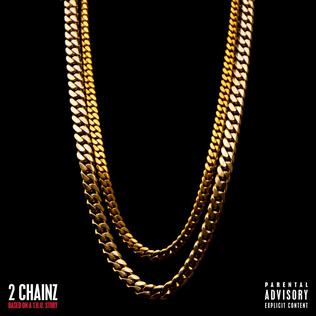
While he had been making music for years as Tity Boi and part of Playaz Circle, Based on a T.R.U. Story is 2 Chainz’s official major-label debut. Released in 2012 — at the tail end of the post blog-era boom and amid the rise of club-ready sad robot, trap and drill music — the record is carried heavily by the three singles that really bang when you let them take hold of you.
2 Chainz is electric on “No Lie,” which also has one of Drake’s best hooks, a slow-build delivery that ramps up to an overflowing boil with Mike Will Made It’s dark production and eerie, glittering synths. It is top notch, and a sound that has been replicated by Mike Will Made It and others a thousand times since.
“I’m Different,” produced by DJ Mustard, is another iconic club hit with a simple, repeated piano melody and singable, get-hyped verses.
“Birthday Song,” featuring Kanye West and produced by West and Mike Dean, has an over-the-top, booming beat that perfectly matches the song’s ridiculous premise:
They ask me what I do and who I do it for (yeah) And how I come up with this shit up in the studio (yeah) All I want for my birthday is a big booty hoe
There’s something about Chainz and Kanye both playing off each other’s dumb lines that just works.
That’s the beauty of 2 Chainz though, and what allowed him rise above a lot of other rappers of the era and to have more and more success down the line. Even when he’s off his game, one thing 2 Chainz has going for him is that he has always been one of the funniest guys around. Even on this record — which is full of what should be lame lines and kind of generic, cringe-worthy phrases — every few bars, he just says something so outlandish that you can’t help but laugh and appreciate the entirety of his craft.
The rest of the album is kind of hit or miss, but 2 Chainz’ personality makes it all fun enough, even if he’s not fully where he’ll get potential-wise with his craft in the future. And the beats throughout — whether it’s the slightly soul overtones on “Extremely Blessed” featuring The Dream and “Stop Me Now,” or the more club-oriented songs like “I Luv Dem Strippers” — pack more of a punch than most of the microwave-ready beats out there at the same time.







 Fresh Out The Deli